Why Is My Vape Leaking? Condensation, E-Liquid and Common Causes (2026 Guide)

Why Is My Vape Leaking? Condensation, E-Liquid and Common Causes (2026 Guide)
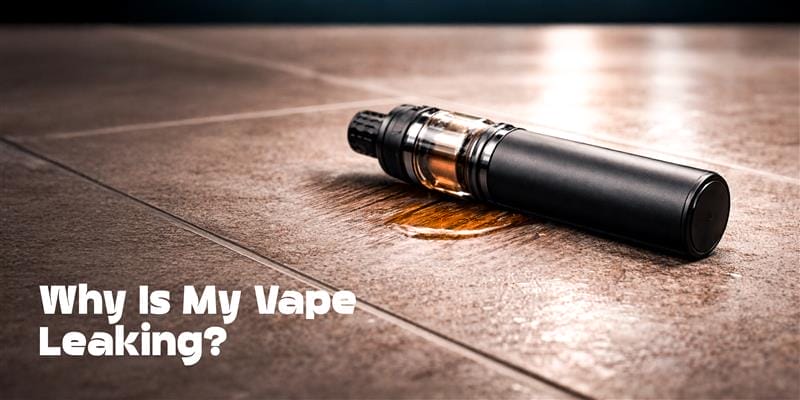
A vape device lying flat on its side on a surface, illustrating incorrect horizontal storage that can lead to e-liquid leaks.
Few things spoil a session faster than reaching for your device only to find a sticky coating of fluid across your fingers, or worse, getting a mouthful of bitter, warm juice. If you are wondering why is my vape leaking, you are certainly not alone. Whether you are dealing with a standard pod system, an all-in-one setup, or a disposable vape leaking into your pocket, fluid migration is one of the most frequent hurdles vapers encounter. In most instances, finding your vape leaking from mouthpiece openings or airflow slots does not mean your device is ruined, but it does mean something in your setup, handling, or environment requires a quick adjustment.
Understanding the root cause of e-liquid seepage involves distinguishing between everyday vapour condensation, internal chamber flooding, and genuine structural issues. By identifying where the fluid originates and why it is escaping, you can quickly remedy the issue, prevent sticky messes, and ensure your hardware operates smoothly and reliably.
Condensation vs True E-Liquid Leaks: How to Tell the Difference
Before pulling your device apart, it is important to identify what kind of moisture you are dealing with. Not all liquid on a vapouriser is unvapourised e-liquid escaping from the reservoir.
Natural Vapour Condensation
Every time you take a draw, vapour travels up through the internal chimney and exits via the drip tip or mouthpiece. Some of that warm vapour naturally cools and settles on the inner walls of the plastic or metal airway. Over a day of regular use, these tiny droplets accumulate into a thin film of moisture around the mouthpiece or underneath a removable pod.
Condensation is completely clear, watery, and appears in small quantities. A quick wipe with a clean tissue or paper towel is usually all that is needed to keep the contact pins and drip tip tidy.
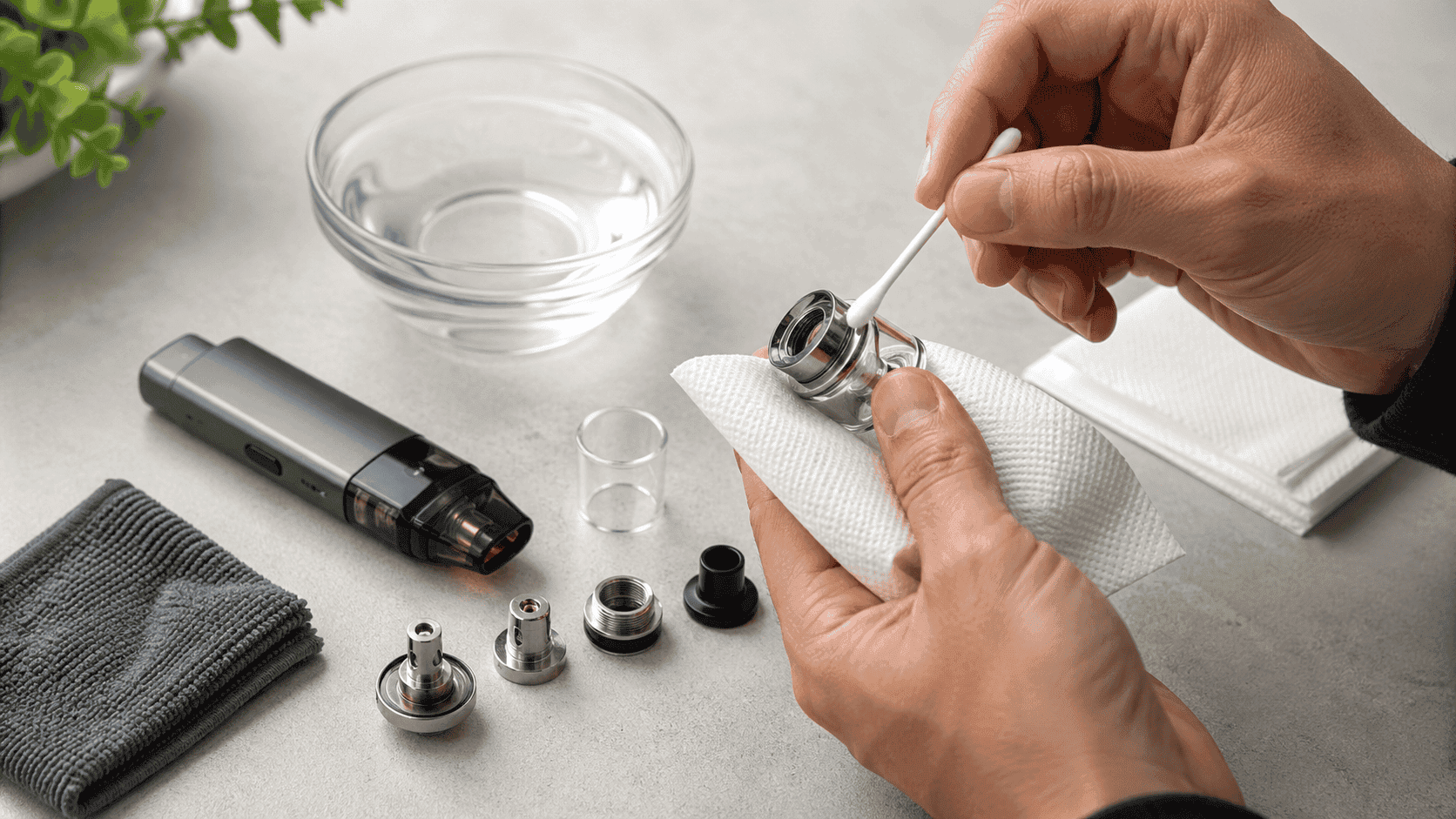
Close-up of a vape device
Chamber Flooding and Spitback
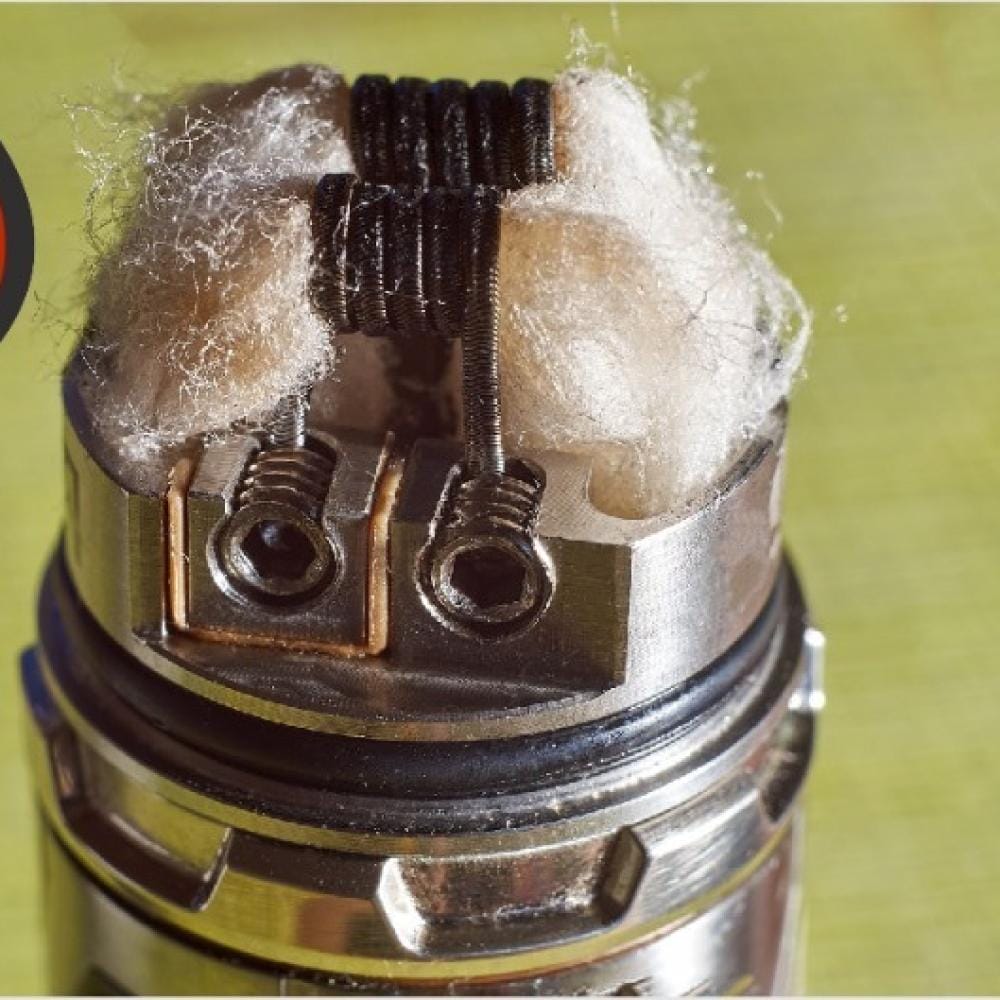
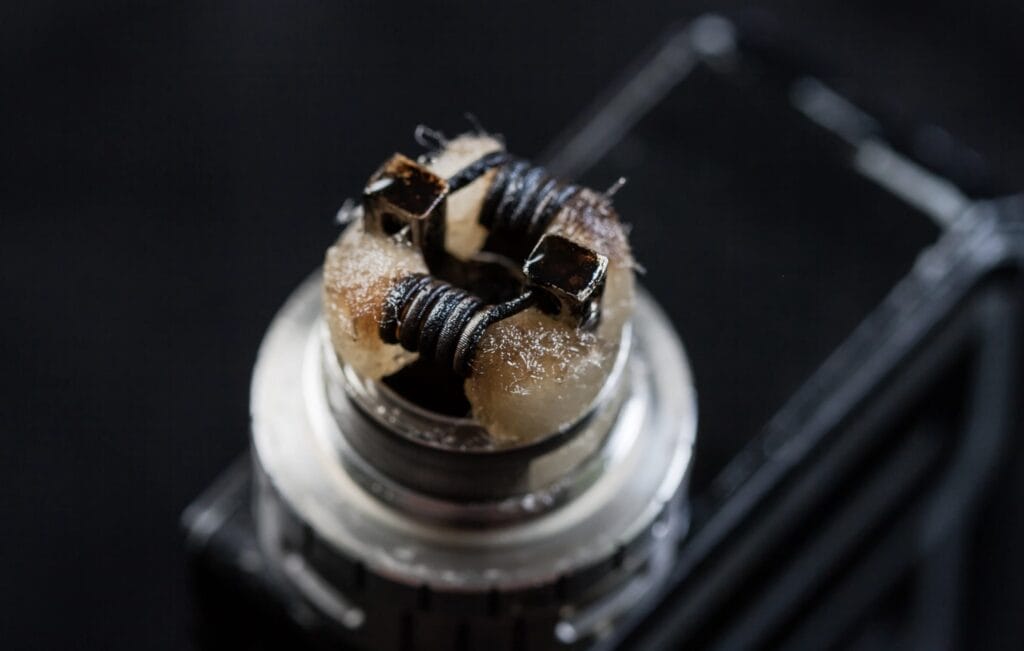
When excess liquid pools directly on the heating coil faster than the element can atomise it, the chamber floods. When you press the fire button or draw on an auto-draw sensor, the excess liquid boils and bubbles violently instead of cleanly vaporising. This leads to gurgling sounds and spits warm, concentrated droplets directly up the airway.
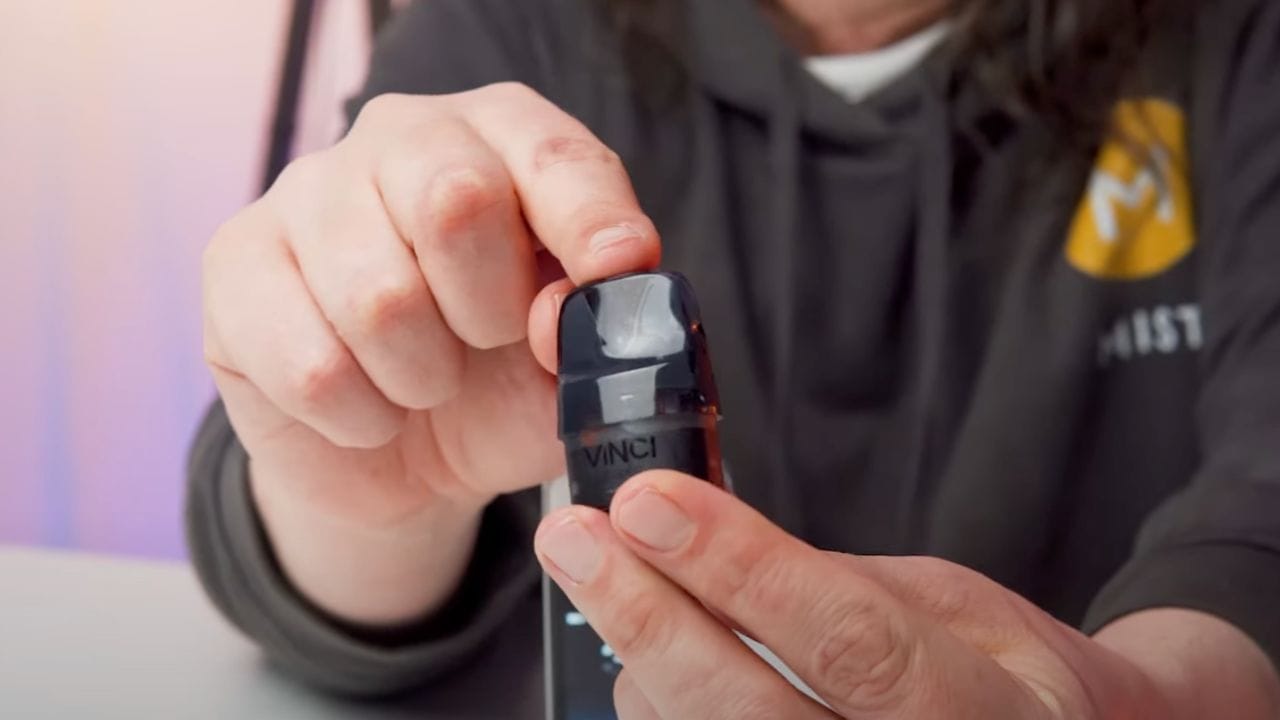
A close-up of a vape mouthpiece with visible e-liquid droplets spitting out, illustrating the issue of spitback due to a flooded coil.
Reservoir and Seal Failures
A true leak occurs when fluid escapes directly from the tank, pod seam, or silicone bung. This typically results in persistent pooling around the base of the pod, fluid escaping from the airflow control rings, or liquid running down the external chassis.
| Symptom | Primary Cause | Appearance / Texture | Immediate Action |
|---|---|---|---|
| Light moisture under pod / tip | Natural vapour condensation | Clear, thin, watery film | Wipe clean with a tissue regularly |
| Gurgling noise with hot droplets | Coil chamber flooding (spitback) | Sticky droplets entering the airway | Clear the chimney and adjust draw strength |
| Liquid pooling around base or seams | Broken seal or temperature thinning | Heavy, sticky e-liquid pooling on hardware | Check pod seals, upright storage, and replace pod if cracked |
| Seepage through airflow slots | Oversaturated wick or pressure loss | Continuous flow of coloured e-liquid | Remove pod, gently wipe bay, and check fluid level |
Common Causes: Why Is My Vape Leaking from Mouthpiece and Base?
When asking why is my vape leaking, the culprit is usually a combination of physical handling, air pressure, and ambient conditions. Here are the primary reasons e-liquid escapes its intended chamber.
1. Inhaling Too Hard or Chain-Vaping
A vapouriser relies on a delicate balance between airflow and atomisation. Unlike traditional cigarettes, which respond to hard, rapid puffs, electronic vapourisers require a gentle, steady draw.
Pulling too forcefully acts like a straw, creating a strong negative pressure that drags raw, unheated e-liquid straight through the wicking material and up into the central airway. Similarly, chain-vaping without allowing the coil to maintain an even temperature can lead to liquid accumulating in the chimney faster than the coil can process it.
2. High Temperatures and Viscosity Changes
The Australian climate can be tough on electronic devices and e-liquids. E-liquids are composed primarily of Vegetable Glycerine (VG) and Propylene Glycol (PG). When exposed to heat—such as being left in a parked car on a hot summer day or sitting in direct sunlight on a verandah—the liquid thins significantly.
As viscosity drops, the e-liquid slips effortlessly through the cotton wicking ports, flooding the atomiser base and running out of the bottom airflow vents.
3. Horizontal and Inverted Storage
Gravity plays a constant role in keeping liquid where it belongs. When a vapouriser is stored flat on its side in a bag or left upside down in a pocket, the e-liquid inside the tank sits against internal air seals and chimney openings that are designed to be exposed to air, not liquid. Over time, fluid will creep into the central chimney and make its way out through the mouthpiece.

A vape device lying flat on its side on a surface, illustrating incorrect horizontal storage that can lead to e-liquid leaks.
4. Overfilling the Reservoir
When filling a refillable pod or tank, it is tempting to fill it to the absolute brim. However, tanks require a small pocket of air at the top to maintain an internal equilibrium. When the pod is sealed, this air pocket helps sustain the surface tension that keeps the e-liquid suspended in the wicking material. Filling the pod completely full can break this balance, forcing excess liquid directly into the coil chamber.
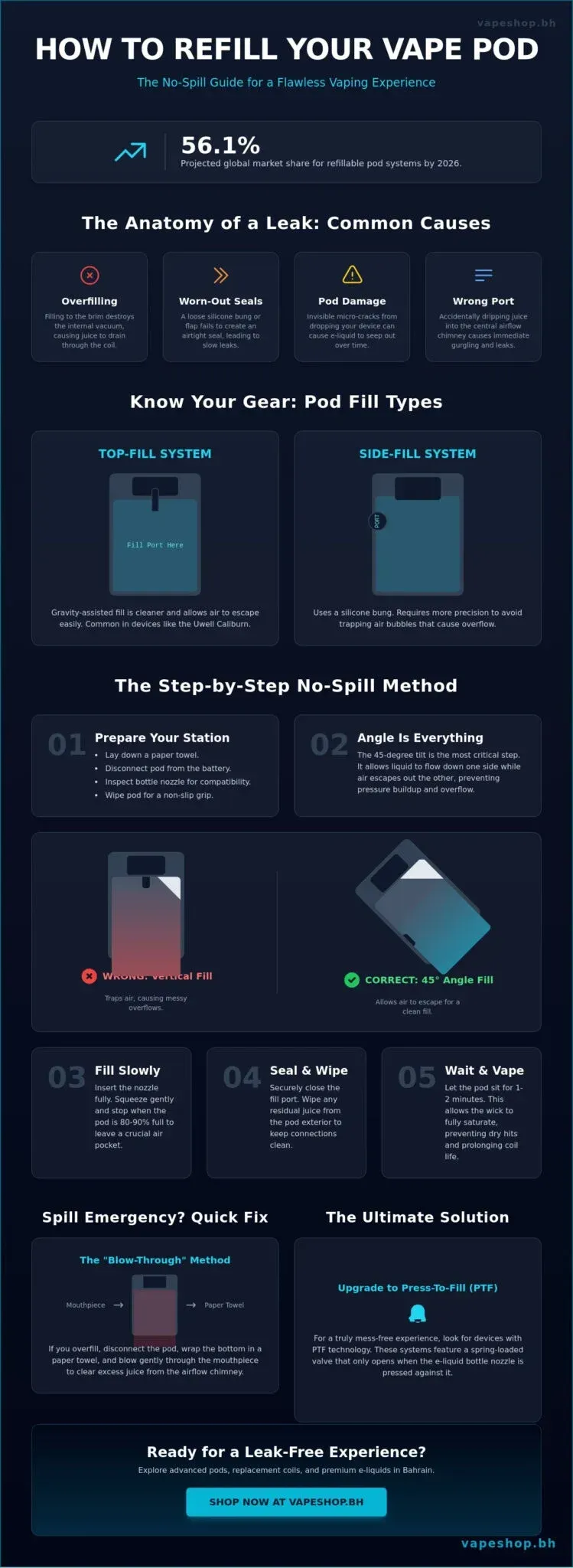
A hand refilling a vape pod or tank, showing the correct e-liquid level with a visible air pocket at the top to prevent overfilling and leaks.
- PROPER REFILL EQUILIBRIUM
- Mouthpiece / Chimney
- | — ~~~~ Air Pocket — | <– Leave gap
- | — | E-Liquid Level | — |
- | — +–Coil/Wick—+ — |
Disposable Vape Leaking: Common Issues and Fixes
The popularity of single-use devices has made disposable vape leaking a frequent complaint. Because disposable vapes are factory-sealed units without user-serviceable parts, dealing with leaks requires a slightly different approach.
Blockages in Pre-Filled Channels
Disposable units feature an internal absorbent matrix or reservoir paired with an auto-draw sensor. If a disposable unit is subjected to rough transit, rapid atmospheric pressure shifts, or pocket lint entering the mouthpiece, the internal balance can be disrupted. Liquid may pool at the top of the silicone stopper, causing unvapourised fluid to transfer directly to your lips during an inhale.
Handling a Leaking Disposable
If you notice fluid on the exterior of a disposable device:
- Wipe the exterior thoroughly: Use an absorbent tissue to remove all residue from the outer shell, mouthpiece, and bottom airflow intake.
- Clear the mouthpiece opening: Gently roll the corner of a clean tissue into a fine point and swab the inner rim of the mouthpiece to capture any pooled liquid.
- Avoid aggressive clearing methods: Never blow forcefully into the mouthpiece of an auto-draw disposable, as doing so can trigger the internal sensor, activate the heating element unintentionally, or push liquid into the internal lithium-ion battery cell.
- Store upright: Keep the disposable standing vertically whenever it is not in active use.
If a disposable continues to purge liquid from its base or seams despite cleaning, the internal housing or seals have likely failed. In such cases, the unit should be safely decommissioned and disposed of according to local battery recycling guidelines.
Practical Troubleshooting: How to Stop and Prevent Leaks
If your refillable pod or tank is misbehaving, working through these straightforward maintenance steps will resolve the vast majority of leaks.
Clean the Chimney and Pod Housing
- Remove the pod from the battery: Detach the pod or tank from the power unit to inspect the connection bay.
- Dry the contact pins: Use a dry cotton bud or cloth to remove any fluid sitting around the gold-plated battery terminals or auto-draw microphone port.
- Swab the chimney: Take a slim twist of paper towel and gently insert it down the top of the mouthpiece to absorb any liquid sitting in the vaporisation tube.
Clear a Flooded Coil
If your device is gurgling heavily or spitting, the atomiser chamber holds too much fluid.
- Detach the pod from the device.
- Wrap a clean piece of paper towel loosely around the base and mouthpiece.
- Give the pod a gentle downward motion to encourage excess fluid to exit onto the tissue.
- Wipe the pod dry and reattach it to the device before taking a smooth, gentle test draw.
Manage Airflow and Inhale Technique
Ensure your airflow vents are not completely choked off. Restricting the airflow too tightly while drawing with high force increases suction pressure, pulling more liquid into the coil than the air current can cool and carry away. Open the airflow slightly and transition to longer, smoother, and gentler draws.
Best Practices for Everyday Device Care
Maintaining clean, leak-free performance comes down to adopting a few sensible everyday habits:
- Keep it out of the heat: Never leave your device inside a glove box, on a sunny windowsill, or in hot environments that thin e-liquid.
- Store devices upright: Whenever you set your vapouriser down on a desk, nightstand, or cup holder, keep it standing vertically.
- Seal plugs firmly: After refilling a pod, press the silicone fill plug firmly back into place and wipe away any stray drops around the fill port before reinserting the pod into the battery housing.
- Inspect for physical damage: Dropping a device onto hard surfaces can cause micro-cracks in plastic pods or misalign internal O-rings, compromising the seal. Replace any pod that shows signs of structural stress.
Red Flag Warnings: When to Retire a Leaking Device
While most moisture is harmless condensation or a minor flooding issue, persistent and severe leaks into electrical components carry risks.
You should stop using and safely dispose of a device or pod if you encounter any of the following warning signs:
- Fluid deep inside the battery casing: If e-liquid has entered the internal circuitry or USB-C charging port, do not attempt to charge the device. Liquid ingress can cause short circuits and permanent electrical failure.
- Uncontrolled auto-firing: If the device continues to heat or hiss after you have finished your inhale, fluid may have bridged the contacts on the internal draw sensor. Disconnect the pod immediately and discontinue use.
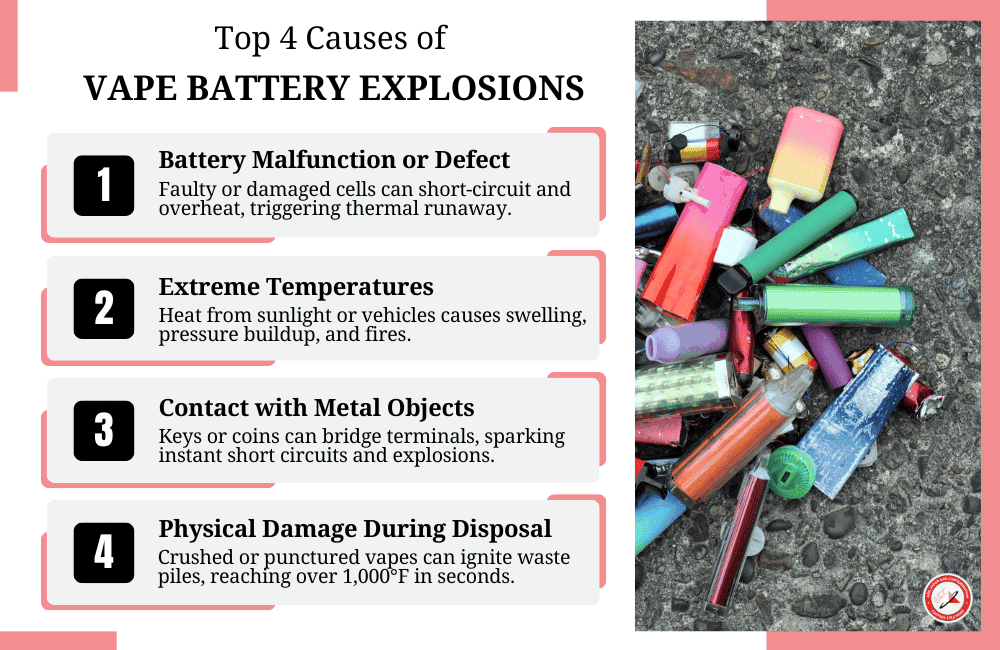
- Excessive heat or swelling: If the battery chassis feels unusually hot to the touch, shows signs of swelling, or emits an acrid odour, isolate the unit away from combustible materials and dispose of it at an approved battery recycling point.
- Fluid contact with mouth: If unvapourised e-liquid enters your mouth, spit it out and rinse your mouth thoroughly with clean water.
A vape device with a visibly swollen battery casing, indicating a dangerous malfunction and an immediate need for safe disposal.
Summary
Dealing with a leaking vape is an annoying disruption, but it is almost always preventable. By telling the difference between everyday condensation and true chamber flooding, adjusting your inhalation technique, storing your hardware upright, and keeping your gear away from extreme heat, you can eliminate spitback and sticky messes. Treat your device with care, keep the contacts clean and dry, and you will enjoy a consistent, hassle-free experience every time.