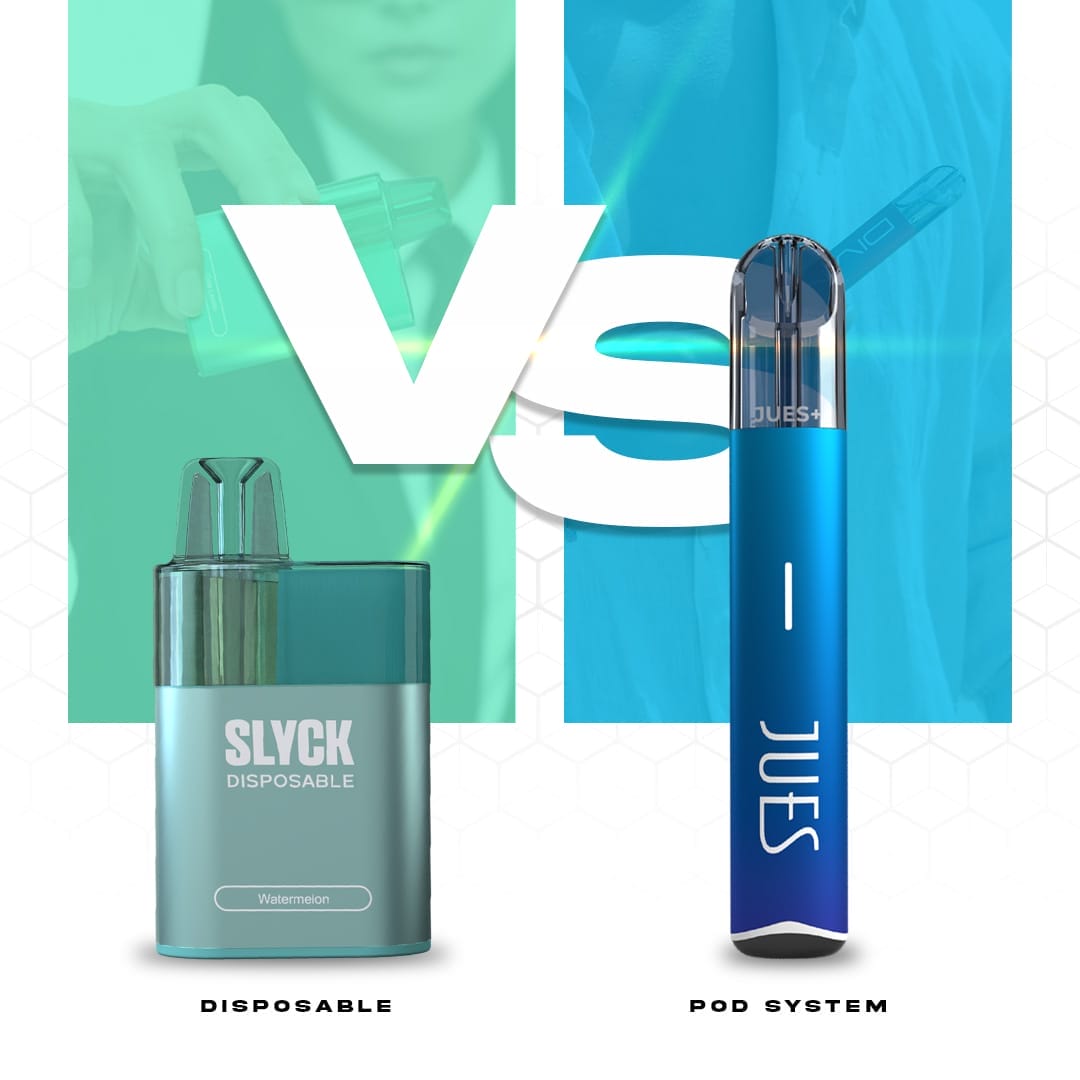
Disposable Vape vs Pod Vape: What’s the Difference in 2026?

Disposable Vape vs Pod Vape: What’s the Difference in 2026?
A bar chart or graph comparing the initial purchase cost and the long-term ongoing running costs of disposable vapes versus refillable pod vape systems.
Choosing between a disposable vape vs pod vape is one of the most common dilemmas for anyone navigating the modern vaping landscape. While both formats are designed to deliver a compact, straightforward nicotine or vapour experience, the underlying engineering, long-term costs, and daily usability could not be more different.
On one side sits the disposable vape: an all-in-one, pre-filled device built for ultimate plug-and-play simplicity. On the other is the pod system: a modular, rechargeable setup that pairs a dedicated battery base with swappable or refillable cartridges. Understanding the functional, economic, and practical contrasts between these two categories will help you determine which setup best aligns with your daily habits, expectations, and personal preferences.
Pod System vs Disposable: How the Hardware Actually Works
To understand the core differences between these two device categories, it helps to look under the bonnet at their hardware architecture.
- DISPOSABLE VAPE
- Integrated Mouthpiece + Pre-soaked Reservoir + Coil
- Fixed Internal Battery (Single-use)
-
- Entire unit is discarded once empty — *
- POD VAPE SYSTEM
- Removable Pod: Refillable / Swappable Cartridge
- | | (Magnetic / Snap Connection)
- Rechargeable Battery Base (USB-C / Long-term use)
-
- Pod or coil is replaced; battery is kept & recharged — *
The Anatomy of a Disposable Vape
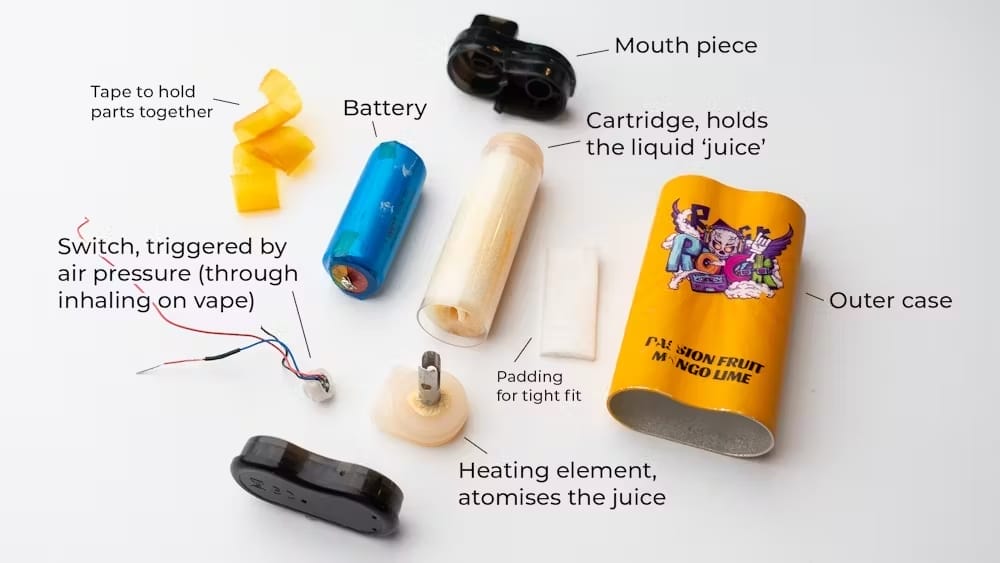
An anatomy diagram showing the internal components of a disposable vape, including the integrated battery, e-liquid reservoir, and heating coil.
A disposable vape is manufactured as a closed, single-use device. Inside the outer casing sits an integrated battery, a pre-saturated wicking material or small reservoir containing e-liquid, and a non-replaceable heating coil.
Because the chassis is factory-sealed, there are no charging ports (on standard single-run units) or refill holes. The device utilises an automatic draw sensor: inhaling through the mouthpiece instantly triggers the battery to heat the coil. Once the internal liquid is exhausted or the battery depletes, the entire device ceases to function and must be discarded. It cannot be safely opened, refilled, or rebuilt.
The Architecture of a Pod Vape System
A pod vape splits the hardware into two distinct components: a reusable battery base and a detachable cartridge (the pod).
- The Battery Base: Houses a rechargeable lithium-ion cell, safety microchips, an LED indicator (or small screen), and usually a standard USB-C charging port.
- The Pod Cartridge: Serves as the e-liquid reservoir and contains the heating element.
Pod systems fall into two main sub-categories:
- Closed Pod Systems: Use pre-filled cartridges that click into the battery. Once the pod is empty, you toss only the small plastic pod and click in a fresh one, keeping the battery body.
- Open Pod Systems: Feature refillable pods with rubber filling ports. You fill the pod manually with bottled e-liquid and replace either the entire plastic pod or just the press-fit coil once the wick eventually degrades.
Disposable or Pod Vape: Long-Term Value and Maintenance Compared
When deciding whether to pick a disposable or pod vape, the financial equation often proves to be the deciding factor. While their price tags look very different at initial checkout, the ongoing running costs tell a completely different story.
Upfront Price vs Ongoing Running Costs
Disposables appeal immediately because of their low barrier to entry. Buying a single disposable device requires minimal upfront commitment. For a casual user who only needs a short-term solution, this initial affordability feels convenient.
However, purchasing sealed, single-use devices on a regular basis means you are paying for a brand-new battery, internal casing, packaging, and sensor mechanism every single time your e-liquid runs out.
With an open pod system, your initial outlay is higher because you must buy the starter hardware kit along with separate e-liquid bottles. Yet once that initial hardware is paid for, your ongoing running costs drop dramatically. You only purchase bottled e-liquid and occasional replacement pods or coils. Because a single bottle of e-liquid and a pack of replacement coils last substantially longer than a single disposable unit, pod systems deliver vastly superior economy over months and years of use.
Maintenance and Daily Handling
The trade-off for the pod system’s superior economy is a small amount of regular upkeep:
- Disposables: Zero maintenance. You unwrap the device, take a draw, and throw it out when it stops firing. There are no pods to fill, no coils to seat, and no charging cables to manage.
- Pod Systems: Low to moderate maintenance. Open systems require you to top up the liquid reservoir periodically, plug the device in via USB-C to recharge the battery, and swap out the coil or cartridge every few weeks when flavour drops off.
Pod Vape vs Disposable: Flavour, Performance, and Customisation
Beyond the pocketbook, the everyday vaping experience differs significantly between these platforms when it comes to vapour density, airflow precision, and taste quality.
- DISPOSABLE VAPE — | — POD VAPE SYSTEM
- Fixed tight airflow — | Adjustable airflow
- Pre-set low wattage — | Tuned / Smart wattage
- Heavily sweetened juice| Vast e-liquid choice
- Fixed nicotine level — | Custom nicotine ratios
Coil Technology and Flavour Delivery
Disposables are factory-tuned to deliver a consistent, highly intense burst of flavour from the first puff. To achieve this, manufacturers typically formulate their pre-filled e-liquids with heavy concentrations of sweetening agents and cooling additives. While this creates a punchy initial taste, the small wicking materials can degrade towards the end of the battery’s life, occasionally resulting in a muted or dry draw.
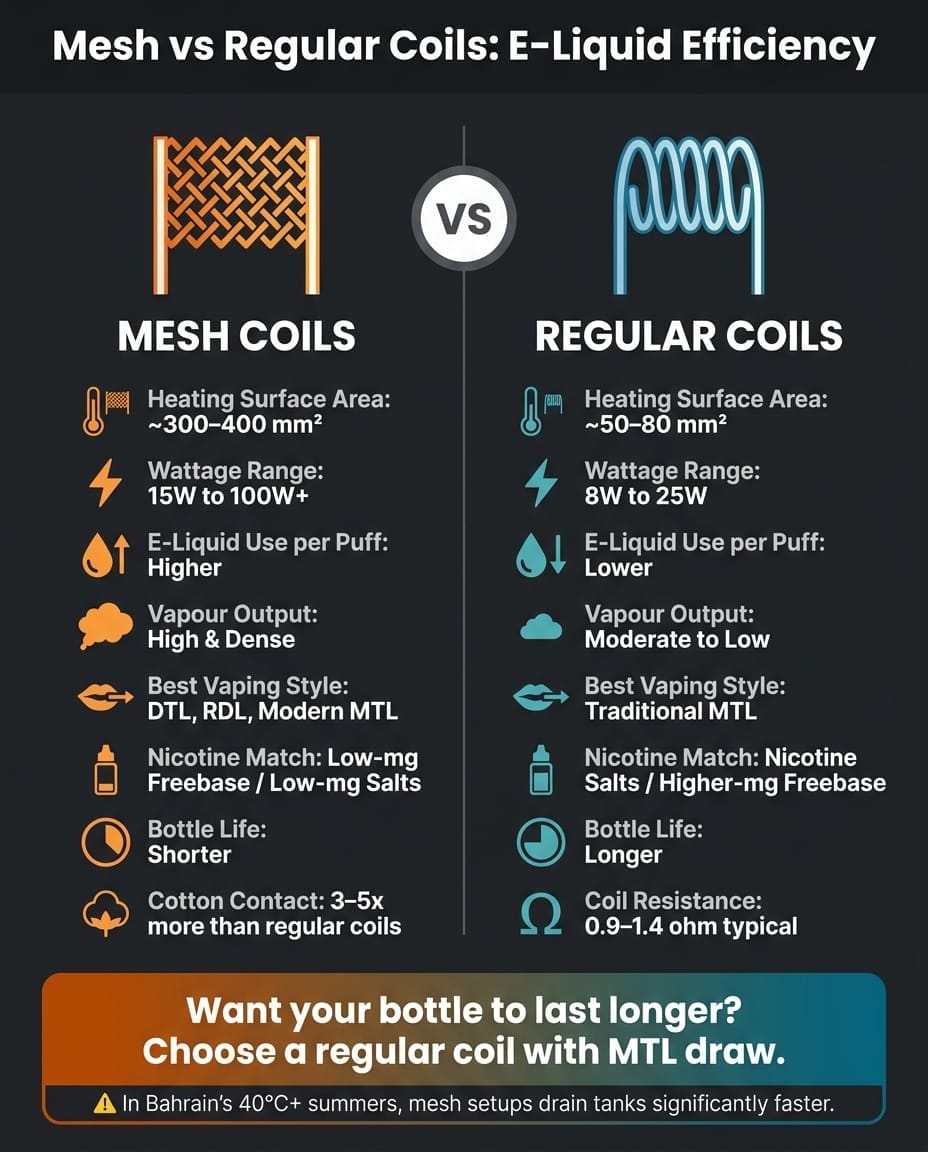
A close-up image or diagram comparing a modern mesh coil, typically found in pod systems, with a more traditional wire coil, often used in disposable vapes.
Refillable pod systems, by contrast, utilise modern mesh coil technology developed for modular hardware. These coils provide even heat distribution across organic cotton wicks, resulting in cleaner, crisper flavour profiles. Furthermore, pod systems allow you to enjoy a broad spectrum of e-liquids—from complex dessert and subtle tobacco blends to crisp fruits—without being locked into ultra-sweet factory recipes.
Airflow and Draw Customisation
Most disposable devices feature a fixed mouth-to-lung (MTL) draw designed to mimic the tight sensation of a traditional cigarette. There are rarely any airflow sliders or power adjustment buttons.
Pod kits frequently include adjustable airflow valves and intelligent wattage recognition. This allows you to tailor your draw resistance:
- Tight MTL: For a discreet, concentrated throat hit.
- Restricted Direct-to-Lung (RDL): For slightly warmer vapour and larger clouds.
Nicotine Strength and Formulation Flexibility
With a disposable, you are confined to whatever strength and liquid formula is sealed inside the casing. With an open pod system, you hold full control over your blend. You can select standard freebase e-liquids for a pronounced throat hit, smooth nicotine salts, or completely nicotine-free liquids in whichever PG/VG ratio suits your preferred coil resistance.
Comprehensive Feature Comparison
To help you visualise how these devices stack up across every critical performance metric, here is a direct comparison of their primary specifications:
| Feature / Factor | Disposable Vapes | Refillable Pod Vape Systems |
|---|---|---|
| Initial Purchase Cost | Low upfront retail price | Moderate starter kit investment |
| Long-Term Operating Cost | High (constant hardware repurchasing) | Low (only liquid and coils are replaced) |
| Battery Functionality | Single-use; discarded when drained | Rechargeable via standard USB-C |
| Refill Capability | Non-refillable; factory-sealed | Open-fill port via bottled e-liquids |
| E-Liquid Selection | Restricted to factory pre-filled flavours | Compatible with broad range of bottled liquids |
| Hardware Customisation | Fixed wattage and set airflow | Adjustable airflow, power levels, and coil resistances |
| Environmental Footprint | Heavy (frequent plastic and battery waste) | Minimal (reusable chassis, minor pod/coil waste) |
| Maintenance Level | None (draw-and-discard) | Low (periodic refilling, charging, and coil swaps) |
| Failure Protection | If hardware faults, entire unit is lost | Components (pod/coil) can be swapped independently |
Environmental Impact and the Single-Use Battery Problem
An anatomy diagram showing the internal components of a disposable vape, including the integrated battery, e-liquid reservoir, and heating coil.
One of the most consequential points of comparison between disposable and pod hardware is their ecological footprint.
Every single disposable vape contains a built-in lithium-ion battery, circuit board, wiring, and a plastic or metallic outer shell. When a disposable runs dry after a few days of use, that fully functional lithium cell is discarded.
DISPOSABLE LIFECYCLE:
[ Manufacture ] -> [ Short Use ] -> [ Lithium Battery & Plastic Binned ] -> Landfill / E-Waste

POD SYSTEM LIFECYCLE:
[ Manufacture ] -> [ Recharged 100s of Times ] -> [ Only Tiny Coil/Pod Replaced ] -> Reusable Chassis
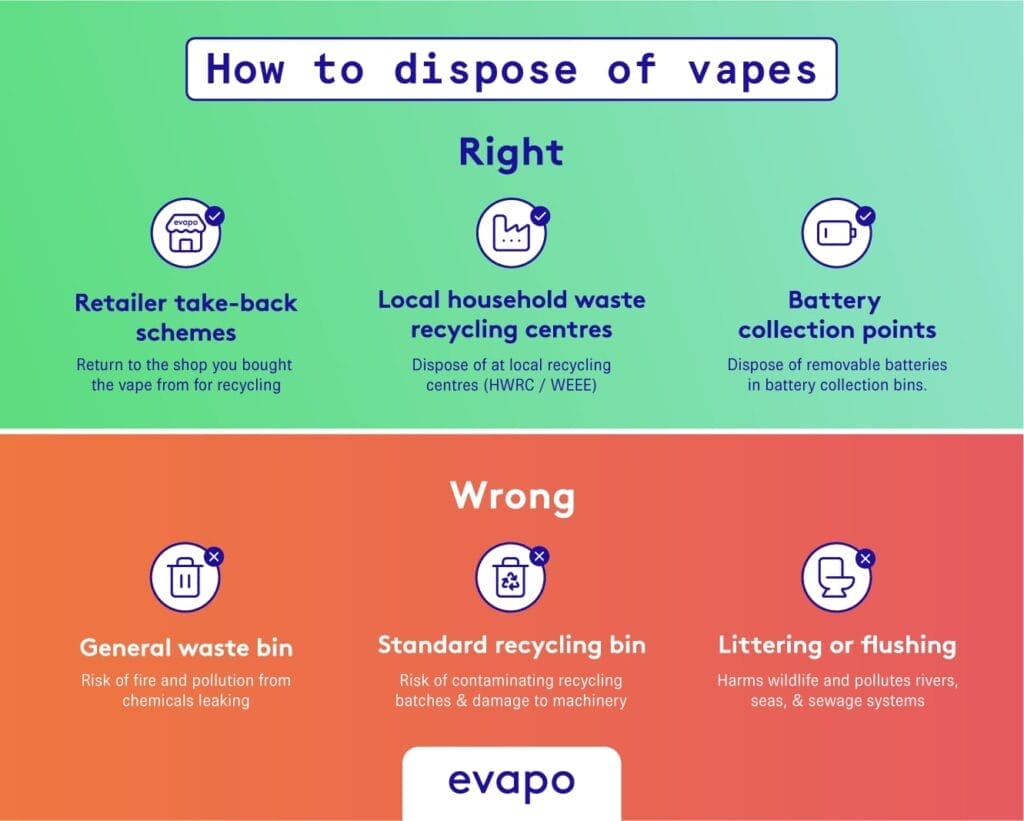
Lithium is a finite, resource-intensive material to mine and refine. Disposing of complex electronics after a single usage cycle creates substantial electronic waste (e-waste). Furthermore, when single-use batteries are carelessly thrown into standard household rubbish bins, they pose serious fire hazards during waste transit and processing if compacted or punctured.
Pod systems represent a significantly more sustainable approach. A single pod battery base can be recharged hundreds of times over a year or more. The only consumable items entering the waste stream are tiny replacement coil heads or small plastic pods, reducing overall structural plastic and battery disposal by an enormous margin.
Usability and Daily Reliability: Which Format Fits Your Lifestyle?
When weighing up whether to carry a pod system vs disposable hardware, considering how each device behaves in daily life helps clarify the choice.
- DAILY USABILITY CHECKLIST
- Need zero setup, zero buttons, and instant draw? — -> DISPOSABLE
- Want pocketable convenience for a weekend away? — -> DISPOSABLE
- Want lowest weekly expense and custom flavours? — -> POD SYSTEM
- Care about reducing electronic waste? — -> POD SYSTEM
- Prefer adjustable airflow and battery indicators? -> POD SYSTEM
Why People Choose Disposables
- Immediate Simplicity: There is no learning curve. You do not need to understand ohm ratings, coil priming, or refilling techniques.
- Extreme Portability: Their compact, all-in-one form factor makes them easy to slip into a pocket or small bag for social outings.
- No Charging Downtime: Once unboxed, they are ready for immediate use without needing to hunt down a power point or USB cable.
Why People Choose Pod Systems
- Hardware Reliability: Budget disposables can occasionally arrive dead on arrival or burn out prematurely. Pod kits use higher-grade internal components, intelligent safety chips, and replaceable coils, ensuring consistent voltage output and long-term durability.
- Battery Level Visibility: Modern pod systems feature multi-colour LED strips or digital battery displays so you always know how much charge remains before leaving home.
- Better In-Hand Feel: Refilled pod kits generally feature premium aluminium alloy shells and ergonomic contours that feel substantially sturdier than lightweight plastic single-use bars.
The Verdict: Making the Right Choice
When comparing a disposable vape vs pod vape, neither format is objectively superior across all scenarios—the ideal option depends entirely on what you value most in your daily routine.
- Choose a disposable vape if your primary priority is total convenience, zero maintenance, and an uncomplicated backup option that requires no refilling or charging cables.
- Choose a refillable pod vape system if you want the most cost-effective long-term solution, enjoy having complete control over your flavours and airflow, and wish to avoid tossing lithium batteries into the waste stream.
For the vast majority of regular adult users, transitioning to an open pod system provides the sweet spot between pocketable portability, exceptional flavour performance, and day-to-day economic sense.