What Does Vape Coil Resistance Mean? Vape Ohms Explained for Everyday Users

What Does Vape Coil Resistance Mean? Vape Ohms Explained for Everyday Users
When you first inspect a replacement coil or a new pod, you will inevitably spot a tiny number stamped onto the metal casing followed by the Greek letter omega ($\Omega$). This number dictates almost everything about how your device operates, from the warmth of the inhale to how quickly your battery drains. Understanding vape coil resistance and having everyday vape ohms explained in straightforward terms removes the guesswork from your setup. Whether you are curious about running a low resistance vape for larger clouds or prefer a high resistance vape for a discreet, familiar sensation, finding the right match is the easiest way to improve your day-to-day experience.
A comparison chart or graphic visually distinguishing low-resistance (sub-ohm) vape coils from high-resistance (plus-ohm) vape coils, highlighting key differences like vapor volume, draw style, and power requirements.
What Are Ohms and How Vape Coil Resistance Works
At its core, a vape coil is a small heating element made of coiled wire or perforated mesh wrapped around an absorbent wicking material. When you press the fire button or take a draw, your device’s battery sends an electric current through this metal element.
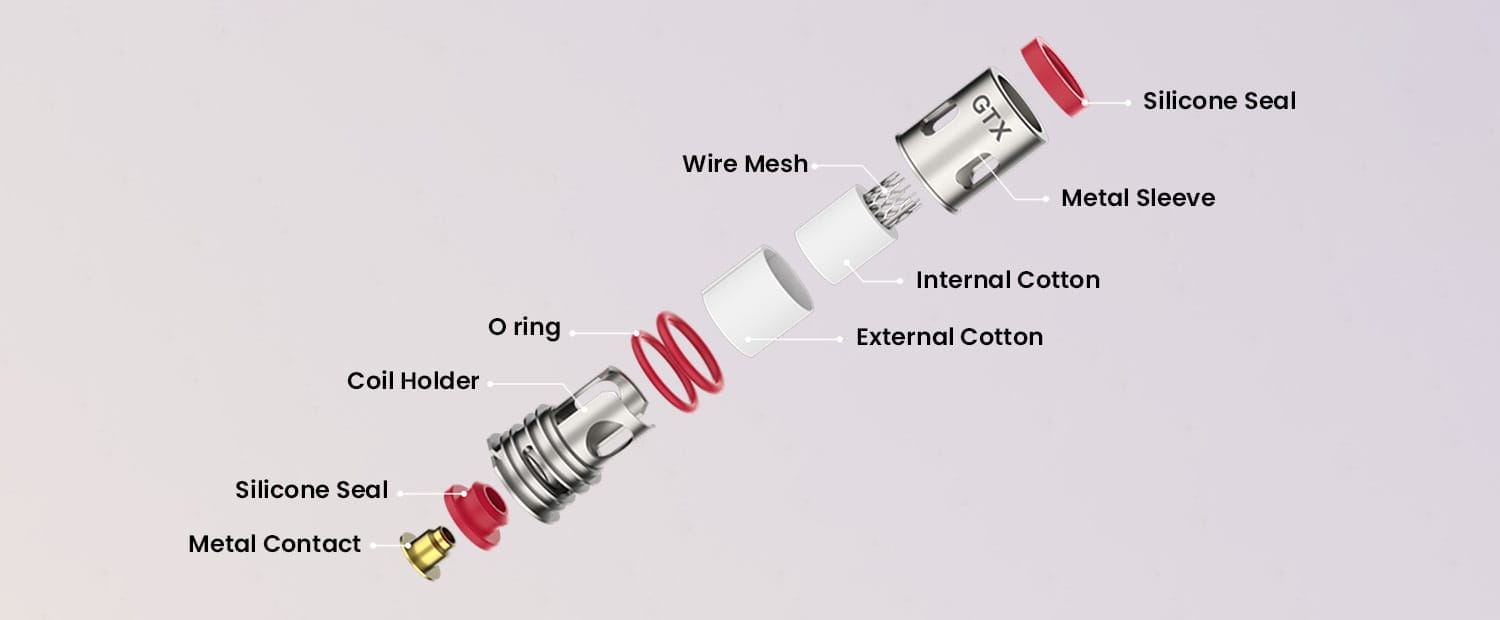
A diagram or cross-section of a vape coil, illustrating its internal components like the heating wire, mesh, and absorbent wicking material.
Resistance is the physical property that determines how strongly a material opposes the flow of electric current. In vaping, this electrical resistance is measured in units called ohms ($\Omega$).
To picture how this works in practice, imagine water flowing through a garden hose:
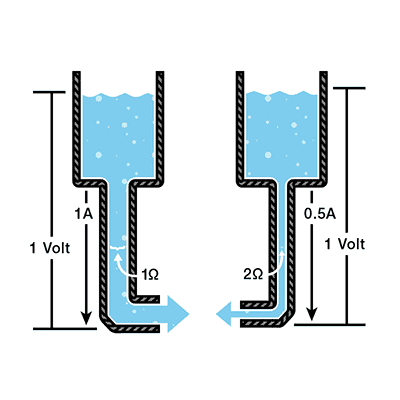
An illustration comparing water flowing freely through a wide garden hose (representing low electrical resistance) and restricted through a narrow hose (representing high electrical resistance).
- A wide hose lets water rush through with minimal restriction. This is similar to a low-resistance coil, which allows electrical current to flow freely, generating higher heat over a broad surface area.
- A narrow hose restricts the flow, creating higher backpressure. This functions like a high-resistance coil, which limits the electrical flow and generates a gentler, more controlled heat.
Because the resistance level directly influences how much heat your coil creates at a given power setting, it serves as the master control dial for vapour production, temperature, and e-liquid vaporisation.
Low Resistance Vape vs High Resistance Vape: Key Differences
Vape coils are broadly categorised into two main camps based on whether their resistance falls below or above one ohm. The boundary line sits right at 1.0 $\Omega$. Anything below that benchmark is commonly referred to as sub-ohm, whilst coils measuring 1.0 $\Omega$ and above are known as standard or plus-ohm coils.
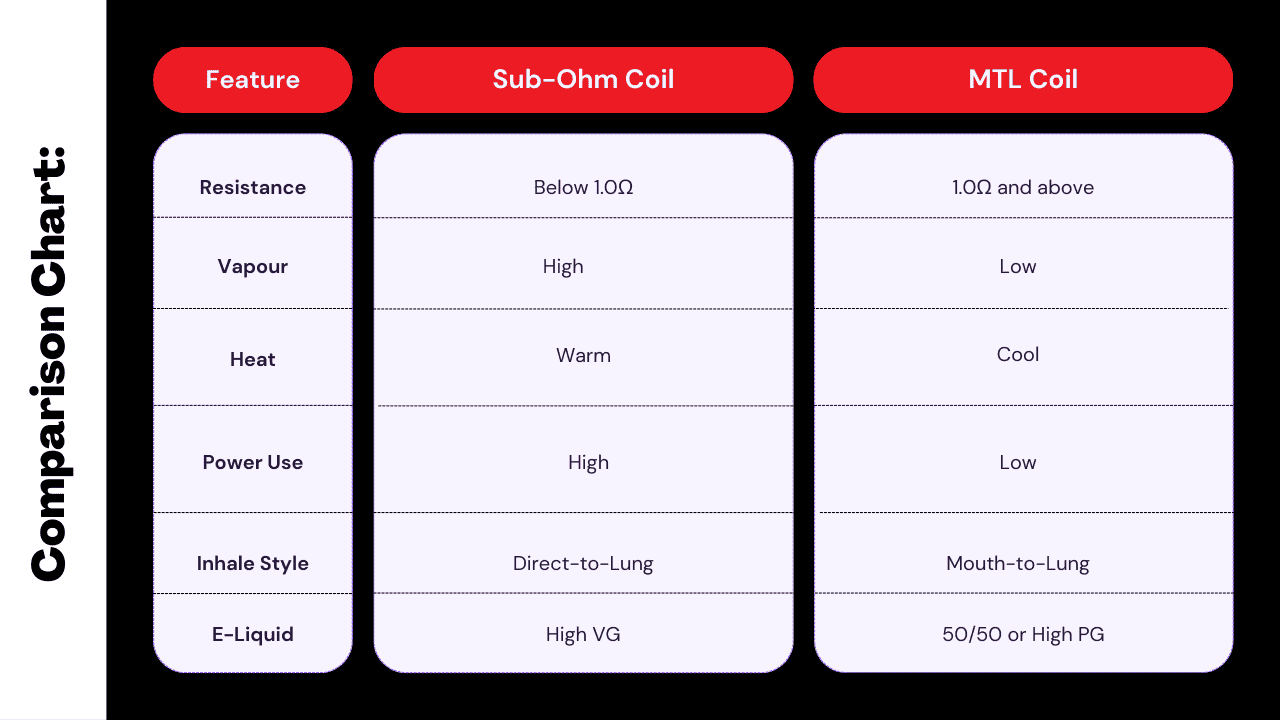
A comparison chart or graphic visually distinguishing low-resistance (sub-ohm) vape coils from high-resistance (plus-ohm) vape coils, highlighting key differences like vapor volume, draw style, and power requirements.
          [ Sub-Ohm / Low Resistance ]       [ Plus-Ohm / High Resistance ]
                      < 1.0 Ω                            ≥ 1.0 Ω
  -------------------------------------------------------------------------
  Vapour:     Warm & dense                       Cool & discreet
  Draw:       Direct-to-Lung (DTL)               Mouth-to-Lung (MTL)
  Power:      Higher wattage (20W - 80W+)        Lower wattage (8W - 18W)
  Drain:      Faster battery & juice use         Conserves battery & juice
The Low Resistance Experience
A low resistance vape uses thicker wire, wider mesh strips, or multi-strand builds to minimise electrical opposition. Because the current meets very little resistance, the coil heats up rapidly and reaches higher temperatures across a larger surface area.
This setup is ideal for vapers who enjoy a warm, full-bodied draw with voluminous vapour. However, driving low-resistance hardware requires more electrical power from your battery and vaporises e-liquid at a significantly faster rate.
The High Resistance Experience
Conversely, a high resistance vape utilises thinner wire or compact coils that restrict electrical flow. These coils run at much lower wattages, producing a cooler, more modest amount of vapour.
Because high-resistance coils do not require intense electrical output, they place minimal strain on your battery cells and consume e-liquid very slowly. They are designed to replicate the sensation of a traditional cigarette draw, making them a popular choice for compact refillable pod systems.
| Feature | Low-Resistance Coils (Sub-Ohm) | High-Resistance Coils (Plus-Ohm) |
|---|---|---|
| Typical Resistance Range | 0.15 $\Omega$ to 0.8 $\Omega$ | 1.0 $\Omega$ to 1.8 $\Omega$ |
| Operating Wattage | 20W to 80W+ | 8W to 18W |
| Vapour Temperature | Warm to hot | Cool to lukewarm |
| Vapour Volume | Dense, large clouds | Light, discreet vapour |
| Airflow Style | Open / Direct-to-Lung (DTL) | Tight / Mouth-to-Lung (MTL) |
| E-Liquid Consumption | Rapid | Economical |
| Battery Life Impact | Higher battery drain | Extended battery life |
How Coil Resistance Shapes Your Daily Vaping Experience
Choosing a specific resistance rating is not just a technical detail; it actively changes how your device feels and performs throughout the day. Here is how different resistance levels alter the key characteristics of your vape.
1. Flavour Clarity and Temperature
The temperature at which your e-liquid vaporises influences which flavour notes stand out. Lower-resistance coils create a warmer chamber, which tends to highlight rich, complex dessert, bakery, or custard flavours. On the other hand, higher-resistance coils run cooler, making them well-suited for crisp menthol, light fruit, or subtle tobacco blends where excessive heat might mute the delicate top notes.
2. Cloud Density and Throat Hit
Vapour density is directly linked to the surface area of the heating element and the amount of electrical current passing through it. If you prefer large, room-filling clouds, low-resistance coils provide the necessary heat and vaporisation rate. If you value discretion and want to avoid drawing attention in public spaces, higher-resistance coils produce a light, subtle vapour that disperses quickly.
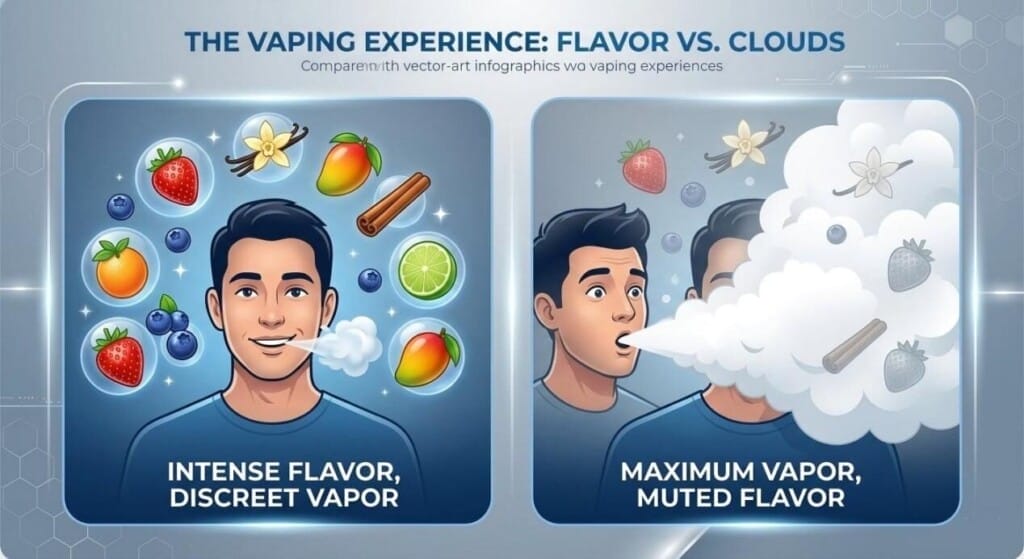
A visual comparison showing a vaper exhaling large, dense clouds of vapor (typical of low-resistance setups) next to another vaper exhaling light, discreet vapor (typical of high-resistance setups).
3. Battery Longevity and E-Liquid Consumption
If you find yourself constantly recharging your device or refilling your pod multiple times before lunchtime, your coil resistance may be the culprit. Low-resistance coils require higher wattage outputs, which pulls energy from the battery much faster. They also atomise more e-liquid with every second the fire button is depressed. Switching to a slightly higher resistance allows a single battery charge and a single tank to last substantially longer.
Matching Inhale Styles: Mouth-to-Lung vs Direct-to-Lung
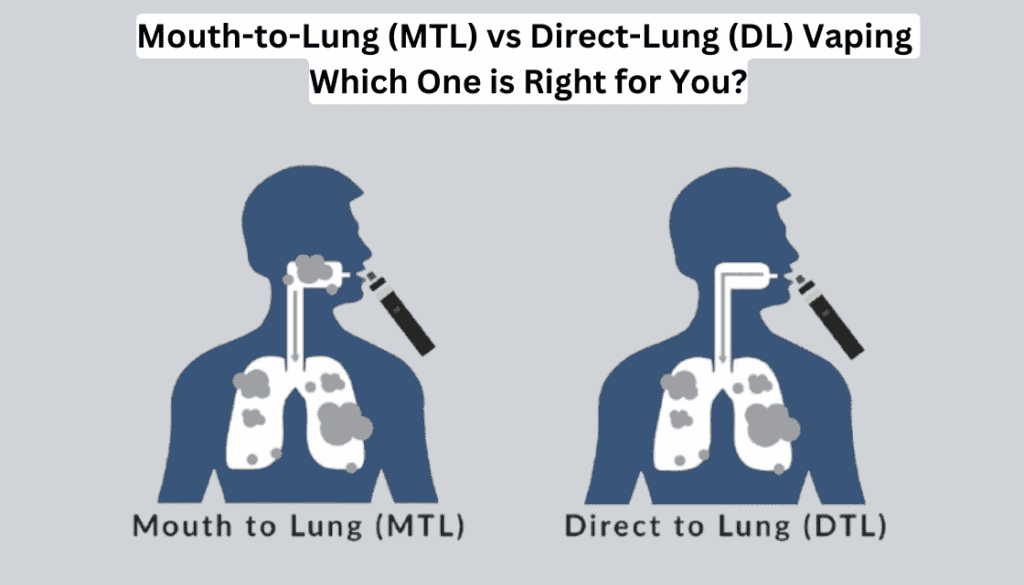
Your preferred inhalation technique plays a major role in determining which coil resistance will feel most natural. The vaping world generally splits inhalation into two distinct styles:
Mouth-to-Lung (MTL)
With Mouth-to-Lung vaping, you draw the vapour into your mouth first, hold it for a brief moment, and then inhale it down into your lungs. This matches the two-stage sensation of a conventional cigarette.
- Best Coil Range: 0.8 $\Omega$ to 1.5 $\Omega$
- Airflow: Tight and restricted
- Why It Works: High-resistance coils operate smoothly with narrow air pathways, preventing the vapour from becoming uncomfortably hot when drawn slowly.
Direct-to-Lung (DTL)
With Direct-to-Lung (or straight-to-lung) vaping, you take a deep, continuous breath directly into your lungs through the device, much like inhaling through a wide snorkel.
- Best Coil Range: 0.15 $\Omega$ to 0.5 $\Omega$
- Airflow: Wide open with minimal draw resistance
- Why It Works: Low-resistance coils require a substantial volume of incoming cool air rushing over the metal to keep the temperature balanced and generate full, dense clouds.
Restricted Direct-to-Lung (RDTL)
If you find MTL slightly too tight but full DTL overwhelming, Restricted Direct-to-Lung acts as a comfortable middle ground. Coils hovering between 0.6 $\Omega$ and 0.8 $\Omega$ offer a moderately warm draw with balanced airflow, giving you enhanced flavour without excessive vapour production.
Practical Tips for Managing Your Vape Coil Resistance
Navigating coil options does not require an advanced physics degree. Keeping a few everyday maintenance habits in mind will help you get the best lifespan and performance out of your hardware.
Check the Manufacturer’s Recommended Wattage
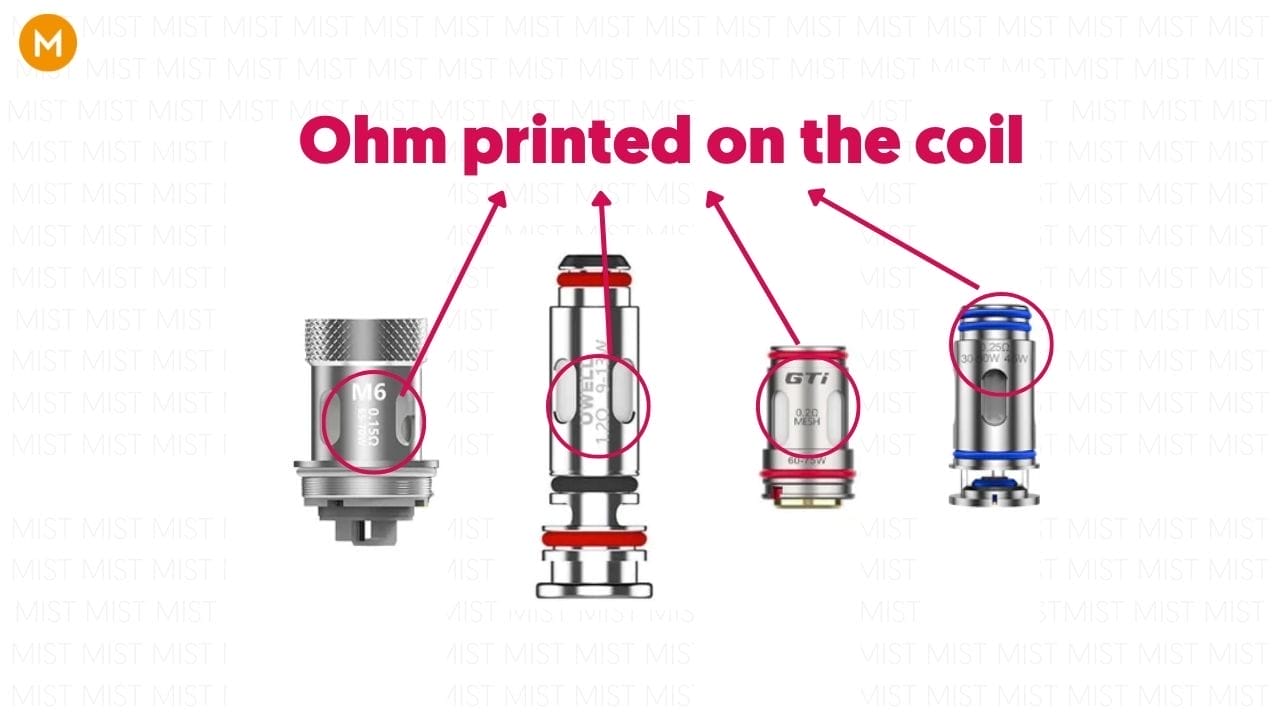
Almost every commercial coil has its optimal wattage range etched directly onto the metal casing alongside the ohm rating (for example, "0.4 $\Omega$ (40–50W)").
- If you fire the coil below the recommended range, the element will not heat up sufficiently to fully vaporise the liquid. This often leads to flooding, gurgling, and e-liquid spitting up through the mouthpiece.
- If you fire the coil above the recommended range, the wicking material cannot resupply liquid fast enough to keep up with the heat, leading to dry hits and prematurely burnt cotton.
Prime Your Coils Before Use
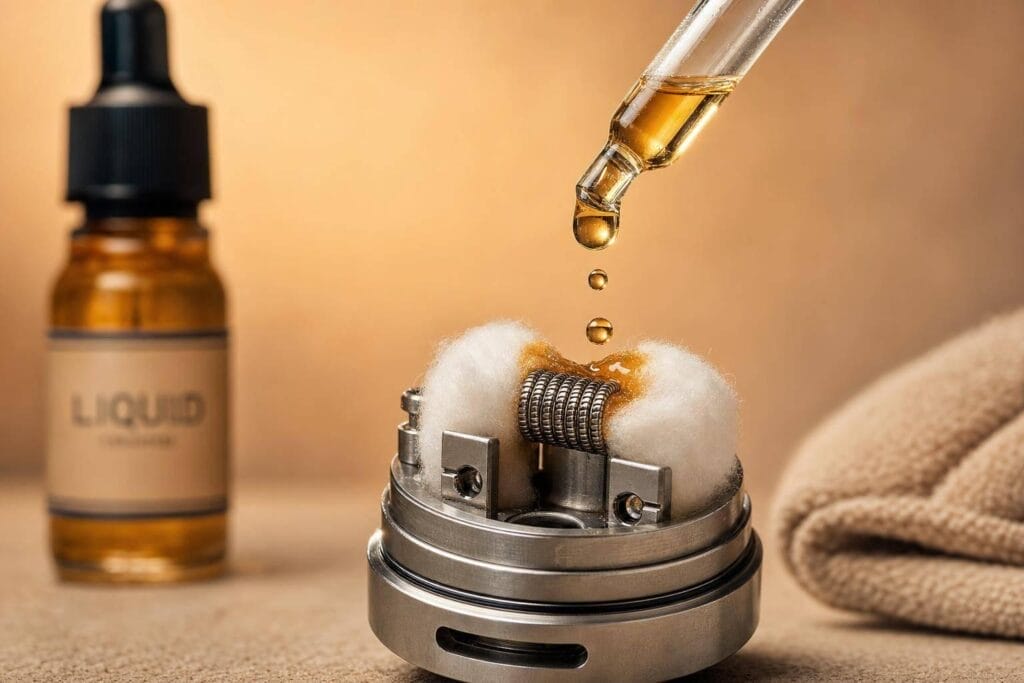
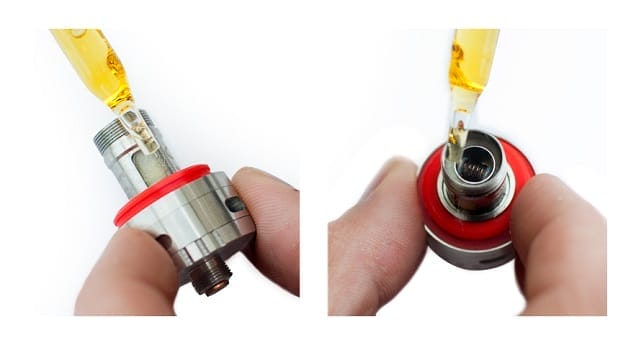
Whenever you install a brand-new coil, always take the time to prime it properly. Place a few drops of e-liquid directly onto the exposed wicking ports around the outside of the coil housing, install it, fill your pod or tank, and let it sit undisturbed for 5 to 10 minutes. This ensures the dry cotton core is completely saturated before any electrical current passes through it, preventing instant scorch marks.
A close-up shot of hands applying drops of e-liquid directly onto the exposed wicking ports of a new vape coil to properly prime it before use.
Match Your Hardware to Your Goals
If you are using a compact pocket pod system, pairing it with high-resistance coils (around 0.8 $\Omega$ to 1.2 $\Omega$) will give you the most reliable battery life and consistent draw. If you own an adjustable box mod with larger external batteries, exploring lower-resistance options (0.2 $\Omega$ to 0.4 $\Omega$) allows you to take advantage of the device’s power capabilities.
Finding Your Ideal Resistance Setup
Understanding vape coil resistance ultimately comes down to knowing what kind of draw you enjoy most. There is no single "correct" ohm rating for every vaper; rather, it is about balancing vapour production, temperature, battery life, and draw restriction to suit your personal routine.
If you are looking for an economical, all-day vape that conserves battery and provides a familiar, restricted draw, lean towards coils rated at 1.0 $\Omega$ or above. If your priority is maximum flavour intensity, warmer vapour, and thick clouds, explore sub-ohm coils below 0.6 $\Omega$. By paying attention to the ohm rating on your coils and matching it with the proper wattage, you can tailor your device to deliver a consistent, satisfying experience every single time.