Why Can the Same Flavour Taste Completely Different Between Vape Brands?

Why Can the Same Flavour Taste Completely Different Between Vape Brands?
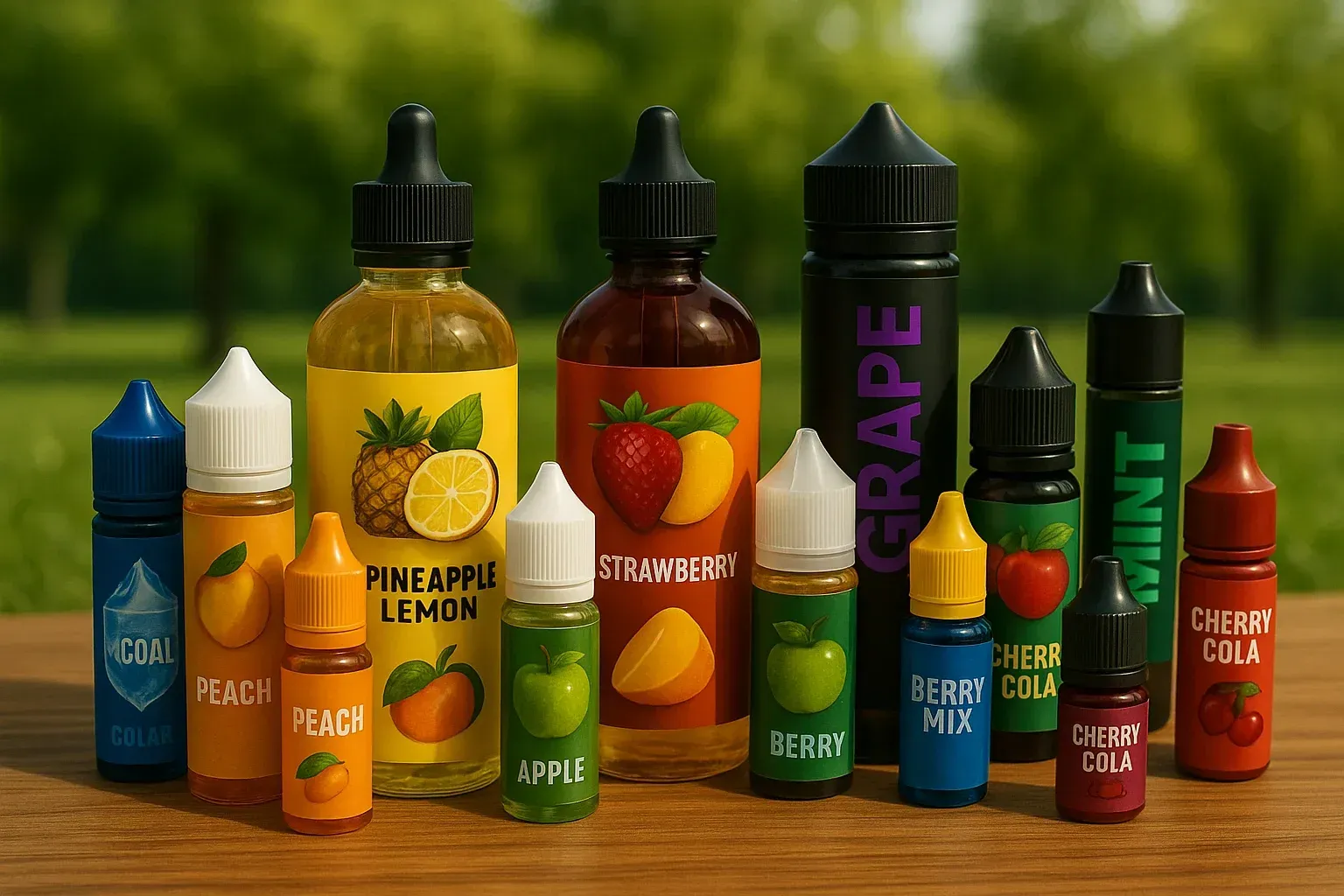
A split image showing two different vape juice bottles, both labeled
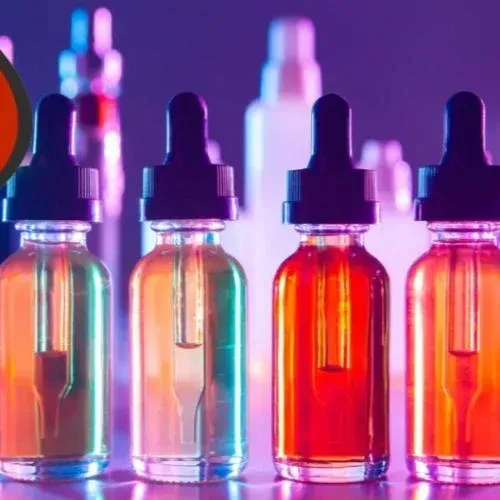
You purchase a bottle of crisp green apple e-liquid from one manufacturer, expecting a tart, refreshing bite. A month later, you pick up the exact same flavour descriptor from a different label, only to find it tastes like ultra-sweet, candied confection with an icy throat hit. Even though both packages promise the exact same profile, the sensory experience is worlds apart. Understanding the key vape flavour differences between vape brands reveals why the same flavour different taste dilemma is so widespread. Everything from proprietary aroma concentrates and sweetener concentrations to coil physics and airflow plays a direct role in shaping your everyday vape taste.

Two bottles of green apple e-liquid from different brands, one depicted as tart and fresh, the other as overly sweet and candied, highlighting the sensory difference.
Flavour creation in the vaping sector is not standardised. There is no universal benchmark for what constitutes a generic strawberry, mint, or tobacco profile. Instead, every manufacturing house approaches flavour formulation through their own chemical blueprints, mixing distinct aroma compounds and adjusting carrier liquids to complement specific hardware setups.
Proprietary Recipes: How Different Vape Brands Interpret the Same Profile
The primary reason two brands deliver contrasting experiences under the same name boils down to their proprietary concentrate recipes. When a flavourist sets out to construct a blend, they select from hundreds of individual food-grade aroma molecules.
Take a standard mango profile as an example:
- Confectionery-Style Blends: One brand might prioritise ethyl maltol and fruity esters to create an intensely sweet, candied mango reminiscent of gummy sweets.
- Authentic Fruit Profiles: Another brand might rely on subtle botanical compounds, slight floral undertones, and natural acidity to replicate the fibrous, earthy tang of real fruit flesh.
- Layered Beverage Profiles: A third manufacturer might introduce fizzy top notes or creamy lactones to mimic a mango smoothie or soda.
Because each brand balances its proprietary flavour concentrates differently, the resulting vapour carries entirely different top, middle, and base notes. The complexity of these recipes means that even a single shared ingredient will interact differently depending on the surrounding chemical matrix.
- Formulation Component — | Lower Intensity Setup — | High Intensity / Saturated Setup
- Flavour Concentrate Base | Subtle, single-note aroma profiles | Multi-layered, complex aroma compounds
- Sweetener Levels — | Low/no added sucralose — | Heavy sucralose saturation
- Cooling Agents (WS-23) — | Minimal or absent — | High concentration for pronounced chill
- Base Carrier Ratio — | High PG (Sharp, clear notes) — | High VG (Dense, sweet, rounded vapour)
- Nicotine Formulation — | Freebase (Pronounced throat hit) — | Nicotine Salt (Smooth, sweet-accentuated)
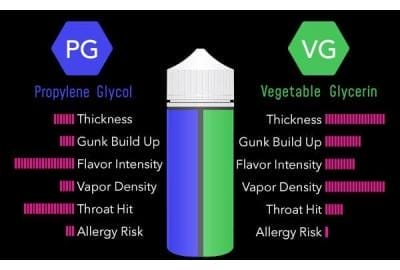
A side-by-side comparison of two vape juice bottles, one labeled High PG with an image suggesting sharp, clear flavor, and the other High VG with an image suggesting dense, sweet vapor clouds.
Disposables vs Bottled Liquids: Sweeteners, Cooling Agents, and the Same Flavour Different Taste
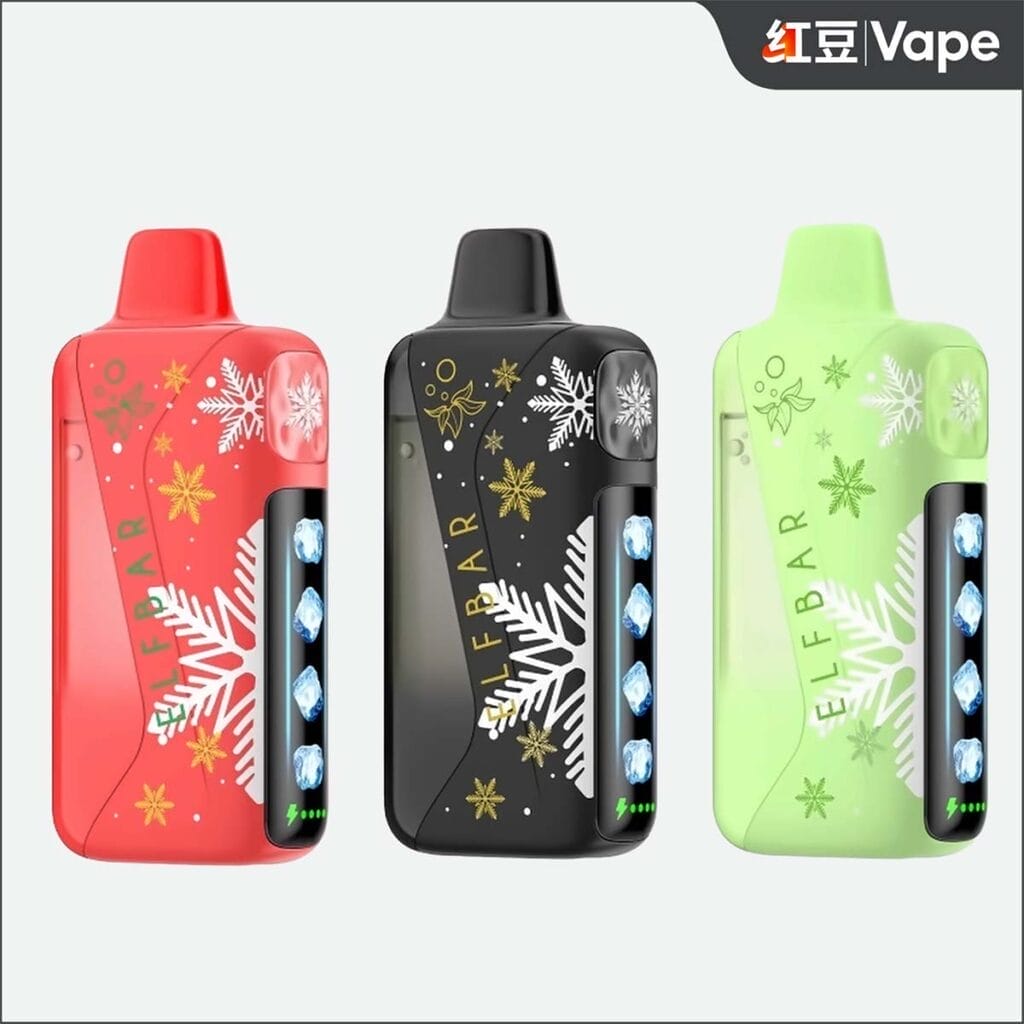
A massive source of confusion among consumers stems from the drastic divide between pre-filled disposable devices and traditional bottled e-liquids. Many vapers notice that a blue raspberry disposable delivers an explosive, sugary punch, whereas the same flavour in a refillable bottle feels muted or dry.
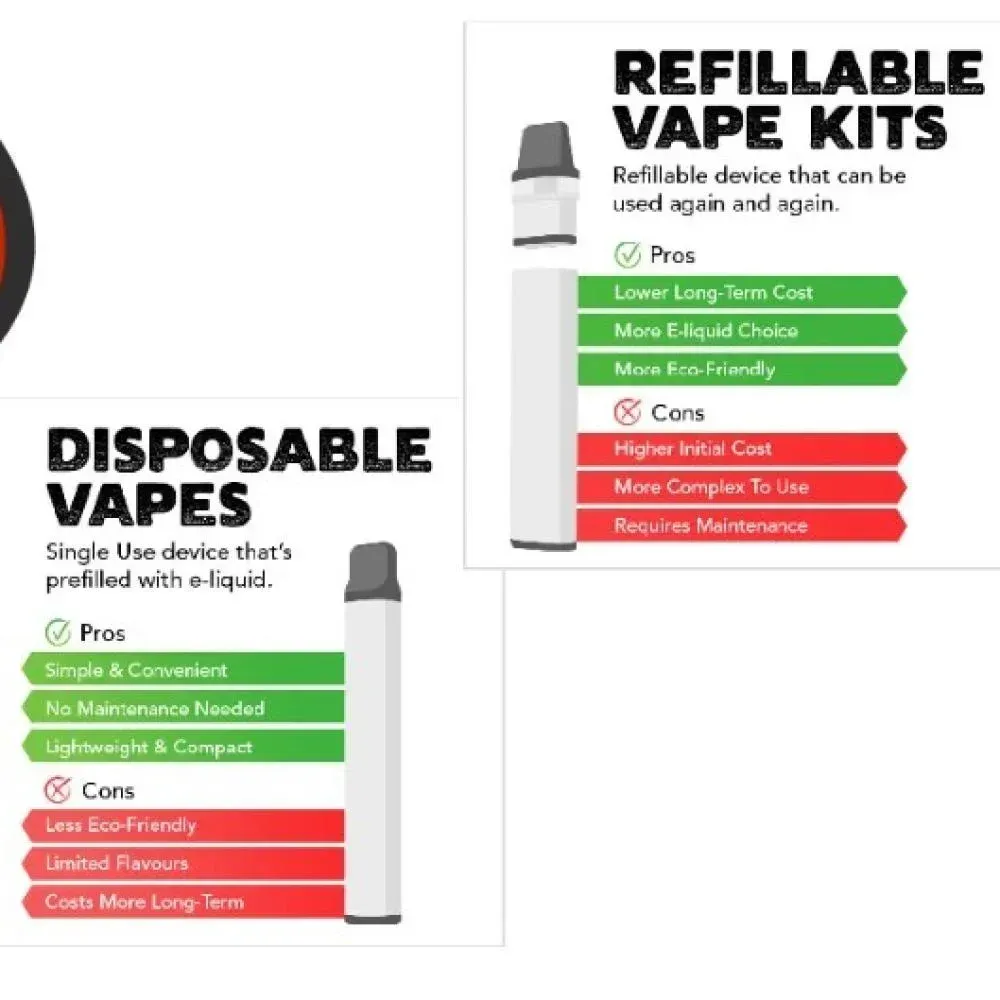
A person holding a sleek, compact disposable vape device in one hand and a bottle of e-liquid next to a refillable vape mod in the other, illustrating the difference in product types.
This variation comes down to how single-use devices are chemically formulated:
Heavy Sweetener Saturation
Pre-filled disposable devices often contain significant concentrations of artificial sweeteners, most notably sucralose. In standard refillable systems, excessive sweetener rapidly caramelises on exposed heating elements, burning the cotton and ruining the coil within days. Because disposables are discarded after their internal reservoir is depleted, manufacturers can saturate the liquid with sweetener without worrying about long-term coil longevity.
Cooling Agents (Koolada and WS-23)
Many modern formulations incorporate specialised cooling agents like WS-23. Unlike traditional menthol, which carries an unmistakable mint aroma, cooling agents chill the back of the throat without imparting a distinct menthol flavour. This enhances the perception of fruit juiciness and sweet notes, making the profile feel vibrant and sharp. When you switch to a bottled juice that lacks these additives, the flavour profile immediately feels flatter and less intense.
The Science of Hardware: How Coils and Wattage Alter Vape Taste
Even if you poured the exact same batch of liquid into two different devices, the flavour would taste noticeably distinct. The physics of vapour generation dictates that heating elements, operating wattage, and airflow dynamically transform flavour compounds.
Temperature-Dependent Volatilisation
E-liquid flavourings are composed of various volatile aromatic compounds, each with a unique boiling point:
- Low-Temperature Notes: Delicate fruit notes, citrus aromatics, and floral accents vaporise cleanly at lower temperatures. When run at low power, these light top notes remain crisp and vibrant.
- High-Temperature Notes: Rich dessert profiles, heavy custards, vanillas, and caramels require higher heat to fully express their base notes. Pushing higher wattage through the coil deepens these flavours, whilst running delicate fruits at excessive power can singe the lighter aromatics, leaving a flat or bitter aftertaste.
Coil Resistance and Heating Surface
The physical construction of the coil element dramatically shifts how the liquid is vaporised. Mesh coils distribute heat evenly across a wide surface area of cotton, producing rapid vaporisation that brings out multi-layered fruit and beverage notes. Conversely, traditional wound-wire coils concentrate heat in specific bands, offering a warmer, denser draw that often favours robust tobacco and dessert flavours. Higher-resistance coils typically operate at lower heat levels, delivering a milder, cooler vape, whereas low-resistance coils push higher current, intensifying sweetness and vaporising heavier flavour notes simultaneously.
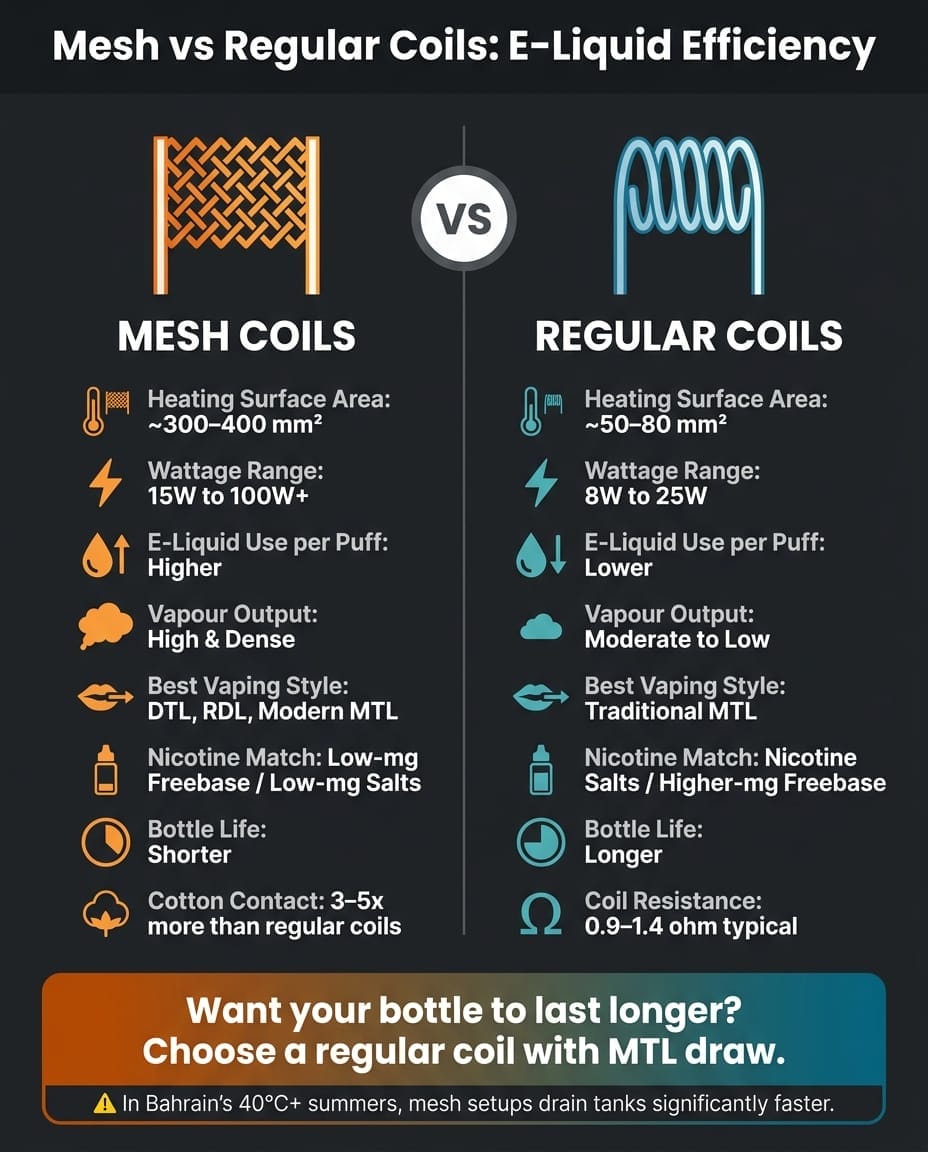
A magnified image showing a cutaway view of a mesh vape coil on one side and a traditional wound-wire vape coil on the other, highlighting their distinct physical constructions.
Base Carriers: How PG/VG Ratios Change Vape Flavour Differences
Every e-liquid uses a base mixture of Propylene Glycol (PG) and Vegetable Glycerin (VG). The ratio of these two carriers alters the delivery and clarity of your flavour:
- Propylene Glycol (PG): PG is a thin, odourless liquid that acts as the primary flavour carrier. It binds efficiently with aroma concentrates and provides the familiar sensation at the back of the throat known as "throat hit". High-PG blends (such as 50/50 mixes) deliver exceptional flavour sharpness, making subtle spice, mint, or citrus profiles stand out cleanly.
- Vegetable Glycerin (VG): VG is a thicker, viscous liquid responsible for producing dense vapour clouds. It possesses an inherent natural sweetness. High-VG liquids (such as 70/30 or 80/20 blends) round off sharp edges, creating a smoother inhale. However, because VG is naturally sweet and dense, it can slightly mute intricate, delicate top notes, trading ultimate flavour definition for thick vapour production.
If Brand A mixes their watermelon blend at a 50/50 ratio and Brand B uses a 70/30 high-VG formulation, the former will taste crisp and punchy, while the latter will produce a smoother, sweeter, cloudier draw.
Nicotine Formats: Freebase Nicotine vs Nicotine Salts
The specific format of nicotine chosen by a manufacturer influences flavour clarity and overall perception on the palate.
- Freebase Nicotine: Standard freebase nicotine provides a noticeable, punchy throat hit. At higher concentrations, the inherent peppery character of freebase nicotine can interact with the flavour concentrate, slightly cutting through intense sweetness and adding an assertive edge to the draw.
- Nicotine Salts: Formulated by pairing nicotine with organic acids (such as benzoic or citric acid), nicotine salts feature a neutral pH. This allows high nicotine concentrations to be inhaled smoothly with minimal throat irritation. Because the harshness is reduced, sweet and fruity aroma compounds come through cleanly without the peppery bite associated with freebase formulations.
Why In-Store Testing Never Matches Your Home Device
A frequent frustration among vapers is tasting a flavour on an in-store test unit or a friend's kit, purchasing the bottle, and discovering it tastes completely different on their personal device. This disparity occurs due to several overlapping variables:
Airflow Configuration
The amount of air entering the atomisation chamber directly controls flavour concentration. A tight, restricted mouth-to-lung (MTL) draw concentrates the vapour, keeping it warm and delivering intense flavour straight to the taste buds. A wide-open direct-to-lung (DTL) draw introduces substantial ambient air, cooling the vapour and diluting the flavour concentration into larger, airy clouds.
Coil Wear and Saturation
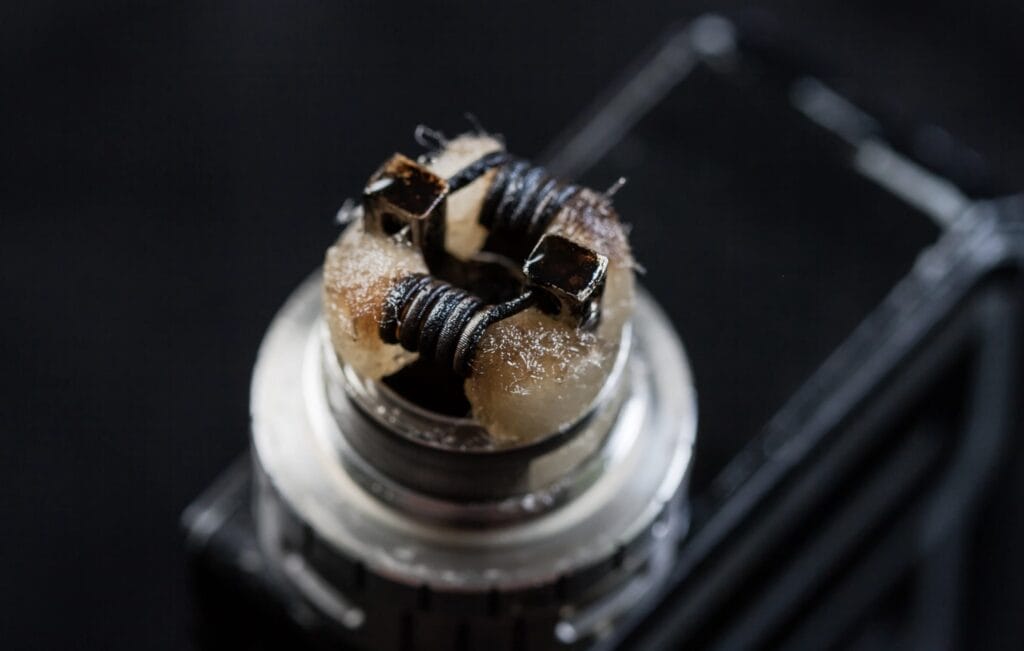
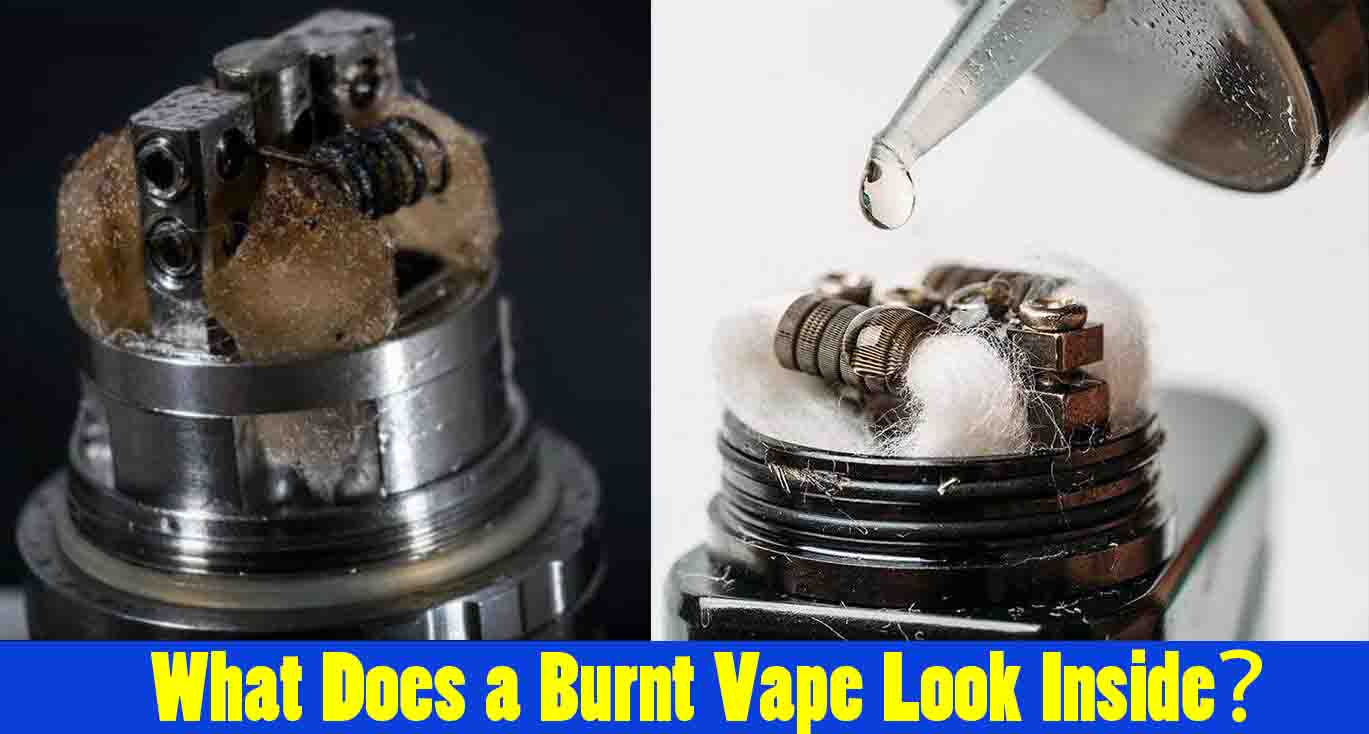
A brand-new coil that has just been saturated will produce crisp flavour separation. In contrast, a coil that has processed multiple millilitres of liquid will have slight residue accumulation on the wick and heating element, subtly altering flavour clarity. Testing a flavour on well-maintained test hardware produces a distinctly brighter note than vaping it on a coil nearing the end of its lifespan.
A side-by-side comparison of two vape coils: one appears brand new and clean with fresh white cotton, while the other is visibly used, showing dark residue and wear on the coil and cotton.
Olfactory Fatigue
When evaluating flavours in a shop environment or sampling multiple options in rapid succession, your olfactory receptors quickly become desensitised. Known colloquially as "vaper's tongue," this temporary sensory fatigue dulls your ability to detect specific sweetness levels and aromatic undertones, leading to a skewed perception of the flavour until your palate resets.
Practical Tips to Customise and Dial in Your Vape Taste
If you have purchased a flavour that doesn't quite match your expectations, minor adjustments to your hardware settings can help you find a more enjoyable profile:
- Adjust Your Power Settings: If a fruit flavour tastes dull or overly sweet, dial your wattage down by 2–5 watts to preserve the delicate top notes. If a dessert or custard flavour feels thin, incrementally raise the wattage to bring out rich caramel and cream undertones.
- Fine-Tune Your Airflow: Restrict your airflow ring slightly to concentrate the vapour density if you feel the flavour is too airy or washed out. Open the airflow wider if the liquid feels overly concentrated or cloying.
- Match Liquid Ratios to Hardware: Ensure you are using the correct PG/VG ratio for your specific pod or tank. Sub-ohm tanks thrive on thicker, high-VG blends, while low-powered pod systems deliver the best flavour clarity with balanced 50/50 formulations.
- Reset Your Palate: If all e-liquids begin tasting muted, switch to a plain menthol or unflavoured liquid for a day, drink plenty of water, and allow your olfactory senses to recover before returning to complex fruit or dessert blends.
Finding Your Ideal Flavour Profile
Navigating the broad spectrum of vape flavour differences comes down to recognising that a flavour descriptor is simply a creative title, not a universal recipe. Two brands offering a "Vanilla Custard" or "Double Apple" are presenting their own distinct interpretations, calibrated for different hardware preferences, sweetener tolerances, and base formulations.
By paying attention to PG/VG balances, nicotine styles, and your device's operating temperature, you can easily identify which formulations suit your palate. Rather than expecting every brand's interpretation to taste identical, treat each label as a unique recipe—and fine-tune your device settings to unlock the best possible flavour from every bottle.