

Is Price per 1,000 Puffs Really a Useful Way to Compare Vapes in 2026?

Is Price per 1,000 Puffs Really a Useful Way to Compare Vapes in 2026?
Walk into any retailer or browse an online catalogue, and you will see devices advertising dizzying numbers: 5,000, 25,000, or even 70,000 puffs. To make sense of these claims, many shoppers turn to a standard unit formula: calculating the cost per puff to determine true disposable vape value. On paper, working out a vape price comparison based on price per 1,000 puffs looks like the cleanest way to evaluate upfront costs across varying device sizes. But does dividing the retail vape price by the number on the packaging actually give you an accurate picture of what you are paying for, or is it a misleading shortcut?
A close-up image of a vape devices adjustable airflow mechanism, showing a user adjusting it or indicating open versus restricted airflow settings.
Understanding how devices perform in everyday situations reveals why theoretical calculations often fall short, and how you can make smarter financial choices when comparing different hardware options.
The Maths Behind the Metric: Calculating Cost per Puff
The logic behind measuring price per 1,000 puffs is straightforward. Because the market features everything from compact single-use sticks to massive dual-tank systems, comparing upfront sticker prices alone is unhelpful. A $15 device looks cheaper than a $35 device on the surface, but if the former claims 2,000 puffs and the latter advertises 20,000 puffs, the larger unit appears significantly more economical.

A retail display or online catalog interface showing various disposable vape devices with prominent, diverse advertised puff counts like 5,000, 25,000, or 70,000.
To standardise the evaluation, consumers apply a simple formula:
$$\text{Cost per 1,000 Puffs} = \left( \frac{\text{Retail Price}}{\text{Advertised Puff Count}} \right) \times 1,000$$
Using this formula, a $20 unit rated for 10,000 puffs produces a nominal figure of $2.00 per 1,000 puffs. This standardised number provides a common baseline to weigh different sizes against each other. It attempts to strip away packaging claims and give shoppers a clear metric for daily budgeting.
However, this calculation relies entirely on a single, crucial assumption: that the advertised puff count matches the actual number of draws you will get during daily use.
The Puff Inflation Problem: Advertised Numbers vs Real-World Longevity
The most significant flaw in relying solely on price per 1,000 puffs is the gap between theoretical ratings and practical usage.
Over recent years, hardware capabilities have expanded rapidly. Where early devices offered a modest 500 draws, modern high-capacity products now advertise figures exceeding 50,000 to 70,000 draws. Yet, these massive ratings do not always translate into a proportionate increase in usable lifespan.
How Draw Behaviour Changes the Equation
Manufacturer ratings represent ideal estimates. In day-to-day life, personal inhalation habits vary widely:
- Inhalation Depth: Taking a long, deep draw vaporises substantially more liquid than a quick, shallow pull. A user who takes steady three-second draws will deplete a device much faster than the nominal rating suggests.
- Airflow Settings: Devices with adjustable airflow draw more e-liquid across the atomiser when opened fully, accelerating consumption.
- Power Output: Many modern units feature multiple output settings, such as boost, pulse, or turbo modes. Engaging these higher-wattage settings delivers more vapour per pull but empties the internal reservoir in a fraction of the advertised time.

A clear mathematical formula displayed, showing Cost per 1,000 Puffs = (Retail Price / Advertised Puff Count) × 1,000.
When your actual draw count falls short of the number printed on the box, your real cost per puff rises immediately. A product that delivers only half its estimated draws effectively doubles your practical cost per thousand pulls.
What Actually Drives the Vape Price of Modern Devices?
When conducting a vape price comparison, it quickly becomes clear that two devices with identical puff claims can carry vastly different price tags. The difference often comes down to internal components, design enhancements, and marketing rather than e-liquid volume alone.
- FACTORS INFLUENCING DEVICE PRICE
- Hardware & Engineering — | Retail & Market Factors
- • Multi-mesh coil setups — | • Brand prestige
- • Smart LCD/LED displays — | • Celebrity collaborations
- • Variable wattage modes — | • Battery rechargeability
- • Dual-tank e-liquid systems | • Premium exterior finishes
1. Smart Displays and Electronics
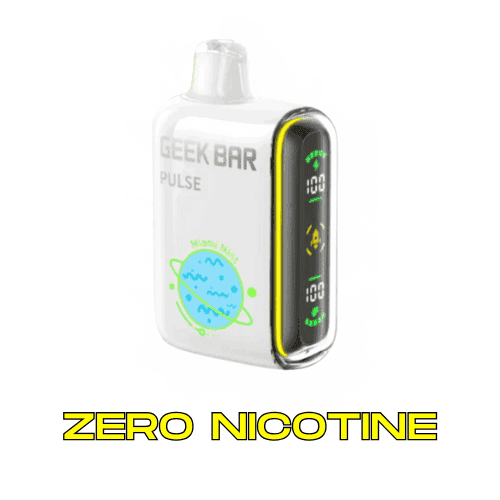
Modern high-output units are no longer simple plastic tubes. Many now include integrated LED or full-colour digital displays that monitor real-time e-liquid volume, battery percentages, and active power modes. While convenient, these microcontrollers and screens add manufacturing expense that increases the upfront retail price without adding more liquid to the tank.
A modern high-output vape device featuring an integrated LED or full-color digital display, showing information like e-liquid volume, battery percentage, or active power modes.
2. Multi-Mesh Coils and Variable Power Modes
Advanced single-use devices frequently incorporate dual-mesh or multi-mesh atomiser systems designed to switch between standard and boost modes. Firing multiple coils simultaneously delivers denser vapour and more intense flavour, but it also increases hardware costs and burns through liquid rapidly.
3. Branding and Endorsements
A notable portion of retail pricing in high-end categories stems from brand equity and celebrity partnerships. Two units with comparable internal capacities may differ in price purely because of exterior branding and packaging design. Paying a premium for an endorsement naturally skews the price-per-puff calculation, as you are paying for the label rather than additional vapour.
Disposable Vape Value: Comparing Disposables with Refillable Pod Kits
To understand whether high-capacity disposables truly offer superior economy, it helps to compare them against alternative hardware categories. While disposable units offer convenience and zero maintenance, refillable open pod systems present a completely different economic model based on cost per millilitre of e-liquid rather than cost per draw.
| Device Category | Typical E-Liquid Volume | Relative Upfront Cost | Ongoing Running Cost | Key Value Trade-Off |
|---|---|---|---|---|
| Standard Compact Disposable | 2 mL – 5 mL | Low | High | Simple and portable, but high recurring cost per mL. |
| High-Capacity Smart Disposable | 10 mL – 25 mL+ | Moderate to High | Moderate | Lower cost per advertised draw; features smart screens and boost modes. |
| Refillable Open Pod System | 2 mL (Refillable from 30–100 mL bottles) | Moderate (Hardware kit) | Low | Higher initial setup expense, but lowest ongoing cost per mL over time. |
Evaluating your spending across a full year highlights the divergence between these formats. While a high-capacity disposable offers better unit economics than a small 600-puff stick, refillable kits allow you to purchase bottled liquid in bulk. Because you only replace the pod or coil periodically rather than discarding the entire battery and housing, the total cost of ownership over several months is generally lower with an open system.
Smarter Ways to Gauge Vape Value Before You Buy
Because price per 1,000 puffs can be distorted by marketing claims and power settings, experienced shoppers look at several complementary metrics before deciding on a device.
Check the Total E-Liquid Volume (mL)
The most reliable physical indicator of how long any device will last is the volume of e-liquid contained in the reservoir, measured in millilitres (mL). Comparing the retail price directly against the total millilitres gives you a grounded, objective baseline that cannot be inflated by optimistic draw estimates:
$$\text{Cost per mL} = \frac{\text{Retail Price}}{\text{Total E-Liquid Volume (mL)}}$$
If Device A costs $25 and contains 15 mL of liquid, you are paying approximately $1.67 per mL. If Device B costs $30 for 12 mL while claiming a higher puff count, Device A remains the better physical purchase regardless of the marketing numbers on the packaging.
Inspect the Battery Capacity and Rechargeability
Large e-liquid reservoirs require multiple charging cycles to fully vaporise the contents. Look for devices with balanced battery capacities (measured in mAh) and modern Type-C charging ports. A reliable power delivery system ensures that the coil receives consistent voltage throughout the lifespan of the tank, preventing weak draws as the battery level dips.
Factor in Personal Consumption Habits
Your individual usage pattern dictates whether a high-capacity unit makes financial sense. If you switch flavours frequently, buying an enormous 50,000-draw device may lead to flavour fatigue before you finish the tank. In contrast, if you prefer a single consistent flavour profile and want minimal maintenance, a high-volume unit provides convenience that justifies the upfront price tag.
Practical Recommendations
Using price per 1,000 puffs is not entirely useless—it serves as a quick, rough benchmark when comparing devices within the same product line or brand tier. However, using it as your sole buying criterion is rarely wise.
To find genuine disposable vape value and ensure your vape price comparison reflects reality:
- Prioritise Millilitres Over Puffs: Look at the physical e-liquid capacity (mL) first to establish an objective cost-per-volume baseline.
- Account for Output Settings: Remember that using boost or high-wattage modes will reduce your total draws below the advertised maximum.
- Assess Extra Features Honestly: Decide whether you actually need digital display screens and variable power modes, or if a simpler device offers better value for money.
- Consider Long-Term Alternatives: If your goal is minimising ongoing running costs, weigh the convenience of large disposables against the substantial savings of a refillable pod system.
By looking past inflated puff counts and focusing on liquid capacity, hardware quality, and your own consumption style, you can budget accurately and choose devices that deliver dependable, cost-effective performance.
