Mesh Coil vs Dual Mesh: What’s the Difference in a Vape? (2026 Guide)

Mesh Coil vs Dual Mesh: What’s the Difference in a Vape? (2026 Guide)
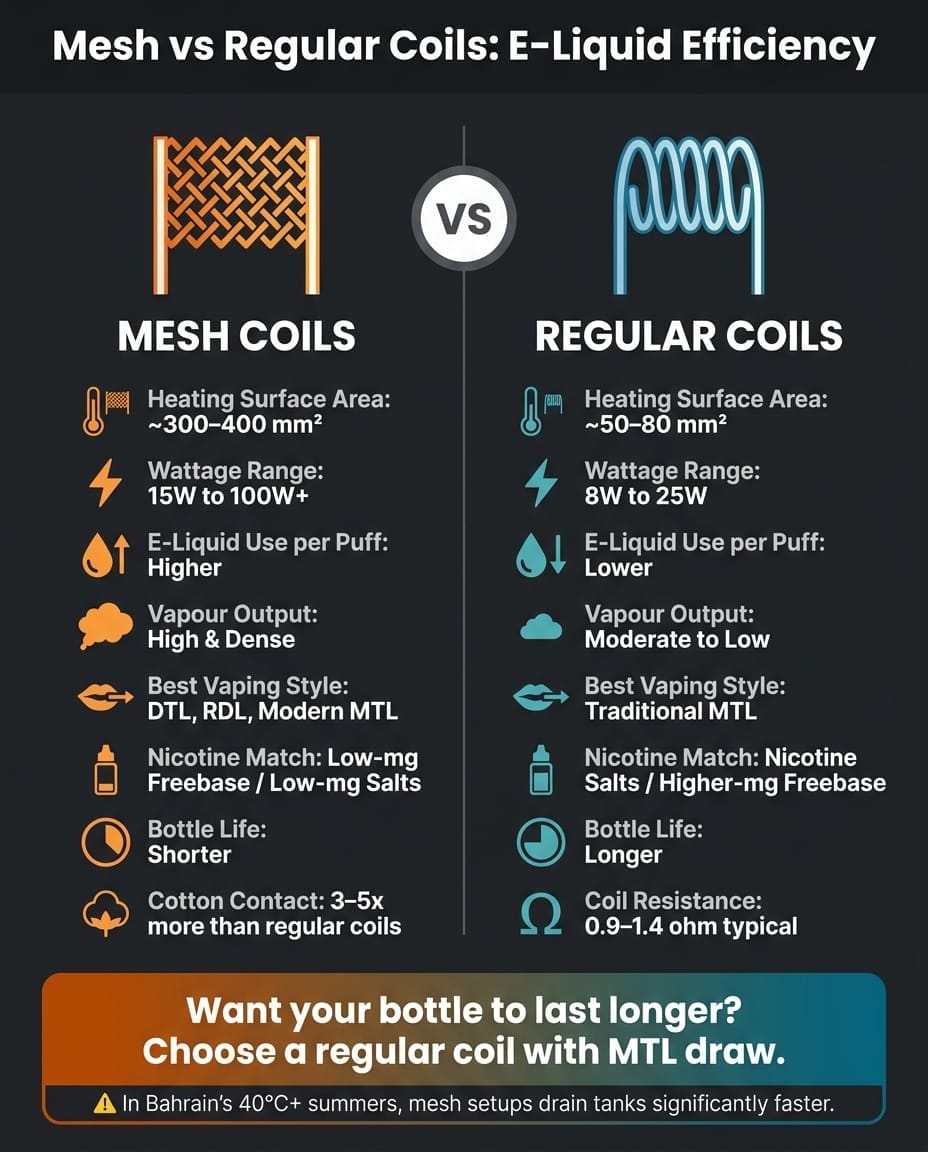
Illustrative graphic comparing a single mesh vape coil and a dual mesh vape coil, highlighting key differences.
Vapour hardware has evolved at a blistering pace over recent years, transforming simple wire heating elements into highly engineered heating grids. If you have looked at modern pod systems, refillable atomisers, or high-capacity devices lately, you have likely noticed manufacturers highlighting dual mesh configurations over standard single mesh builds. When weighing up mesh coil vs dual mesh options, understanding how these two designs impact flavour clarity, vapour density, power consumption, and coil longevity is essential for finding the right vape for your personal routine.
While both styles represent a massive leap forward from traditional round-wire coils, they cater to distinctly different vaping preferences. A single mesh setup prioritises battery efficiency and smooth, balanced vapour, whereas dual mesh hardware focuses on maximum surface area, intense warmth, and dense clouds. This comprehensive breakdown explores the structural and functional differences between these technologies so you can make an informed choice.
The Basics: How Mesh Coils Changed Vaping
To appreciate what a dual mesh setup brings to the table, it helps to understand why single mesh coils revolutionised vaping in the first place.
For years, atomisers relied on wound metal wire coiled around a cotton wick. While effective, standard wire concentrates heat along a narrow spiral. This design often creates microscopic hot spots—areas where the metal gets significantly hotter than the surrounding wire—leading to uneven vapourisation, muted flavours, and prematurely burnt cotton.
- Traditional Wire Coil: — Mesh Coil Sheet:
- (Concentrated Heat) — (Even Heat Distribution)
- (Narrow surface contact)
- (Broad surface contact)

Diagram comparing a traditional wire vape coil with concentrated heat and narrow contact versus a mesh coil sheet with even heat and broad contact.
Mesh completely changed this dynamic. Instead of a solid strand of coiled wire, a mesh coil uses a flat, perforated metal strip bent into a cylindrical chimney or embedded directly against the wick. The benefits of this lattice structure include:
- Massive Surface Area: The woven or perforated design increases the contact area between the metal element and the e-liquid-saturated organic cotton.
- Uniform Thermal Distribution: Electrical current spreads evenly across the entire grid, virtually eliminating hot spots and preventing scorch marks.
- Instant Ramp-Up: Because the metal sheet is ultra-thin, it reaches optimal operating temperature in fractions of a second.
- Extended Wicking Life: Even heating puts less thermal stress on isolated patches of cotton, allowing the wick to last substantially longer before degrading.
Single Mesh Coil vs Dual Mesh: Core Design Differences
The jump from a single mesh strip to a dual mesh architecture represents a significant mechanical shift. While single mesh remains the benchmark for reliable everyday performance, dual mesh systems introduce more sophisticated engineering to double your vapourisation potential.
- Single Mesh Chamber: — Dual Mesh Chamber:
- Single — Dual Channels
- Lattice — or Grids
- (Balanced draw) — (Double surface area)

Diagram illustrating the structural layout differences between a single mesh vape coil chamber and a dual mesh vape coil chamber.
1. Structural Layout and Heating Area
A single mesh atomiser houses one cylindrical strip of mesh surrounding a central airflow bore. Air travels straight up through the core, picking up aerosolised e-liquid evenly along the inner perimeter.
A dual mesh setup, by contrast, integrates two distinct mesh heating elements within the atomiser chamber. Depending on the device design, these strips may sit side-by-side in dual airflow chimneys, run in parallel concentric rings, or occupy independent chambers. By doubling the quantity of perforated metal, the atomiser effectively doubles the active heating surface area available to turn e-liquid into vapour.
2. Operational Modes: Boost vs Alternating Firing
In modern hardware, dual mesh coils generally operate in one of two configurations:
- Simultaneous Firing (Turbo or Boost Mode): Both mesh strips ignite at the exact same moment when you press the fire button or draw on the mouthpiece. This draws more current to heat both grids at once, instantly producing twice the aerosol density of a standard single coil.
- Alternating Firing (Eco or Endurance Mode): Some advanced chipsets alternate power between Coil A and Coil B with every subsequent puff. This allows one coil to cool and fully re-saturate with e-liquid while the other fires, mitigating thermal fatigue and preserving wick freshness over heavy, extended use.
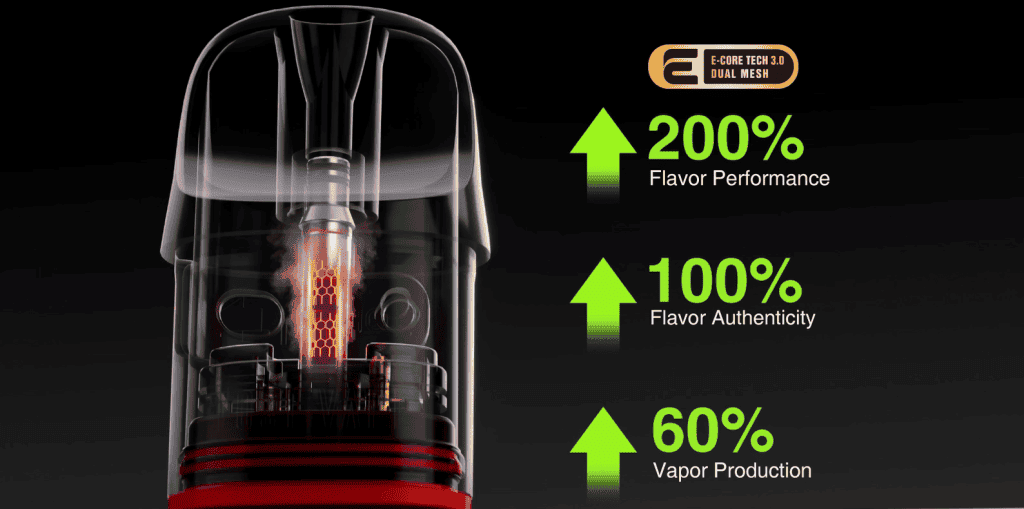
Illustrative diagram showing both mesh strips in a dual mesh vape coil firing simultaneously, indicating a boost or turbo mode.
Mesh Coil vs Dual Mesh Performance: Flavour, Vapour, and Power
When choosing between these two configurations, performance differences become apparent across four main metrics: flavour reproduction, vapour temperature, e-liquid consumption, and battery drainage.
- PERFORMANCE AT A GLANCE
- Single Mesh — Dual Mesh
- Moderate Heat — Warmer Draw
- Conservative Juice — High Juice Use
- Longer Battery — Shorter Battery
- Balanced Flavour — Intense Flavour
Flavour Concentration and Layering
Because a dual mesh coil atomises a larger volume of e-liquid per millisecond, it delivers a richer, more concentrated flavour profile. Complex e-liquids—such as rich custards, multi-layered desserts, or intricate fruit medleys—often reveal subtle undertones on a dual mesh setup that might taste flat on lower-powered single coils. However, for vapers who prefer a subtle, smooth taste rather than an overwhelming punch of sweetness and cooling agent, a single mesh coil provides a cleaner, more understated profile.
Vapour Density and Warmth
Single mesh coils produce a cooler, silkier vapour that many mouth-to-lung (MTL) and restricted direct-lung (RDL) vapers favour. Dual mesh setups naturally generate significantly warmer, denser clouds. If you enjoy a robust throat hit and thick, room-filling vapour, dual mesh is the clear winner in thermal output.
E-Liquid Consumption Rates
There is no free lunch when it comes to vapour generation. Because dual mesh elements expose twice as much e-liquid to heat, they consume vape juice at a noticeably accelerated rate. If you are using an open-pod system, you will find yourself refilling the tank considerably more often when running in dual mesh or boost mode compared to a standard single mesh coil.
Battery Life and Current Draw
Powering two distinct heating grids demands greater electrical current from the battery cell. If you use a compact device with a built-in battery, running dual mesh continuously will drain your charge much faster. Single mesh coils remain the undisputed champions of energy efficiency, making them ideal for all-day reliability away from a wall charger.
Single Mesh vs Dual Mesh: Side-by-Side Comparison
To help you visualise how these two atomiser styles stack up across everyday vaping scenarios, here is a direct comparison of their primary characteristics:
| Feature / Metric | Single Mesh Coil | Dual Mesh Coil |
|---|---|---|
| Heating Elements | 1 Perforated metal strip | 2 Independent mesh strips |
| Ramp-Up Speed | Fast | Near-instantaneous |
| Vapour Temperature | Cool to mildly warm | Warm to hot |
| Cloud Production | Moderate, discreet to medium | Very dense, heavy cloud output |
| Flavour Intensity | Clean, balanced, smooth | Deep, concentrated, intense |
| E-Liquid Consumption | Low to moderate | High to very high |
| Battery Consumption | Low (energy-efficient) | High (drains cells faster) |
| Ideal Vaping Style | MTL / Smooth RDL | Warm RDL / Full DTL |
Mesh Coil vs Dual Mesh: Choosing the Right Setup for Your Needs
Selecting the ideal configuration comes down to how you vape, what kind of liquids you enjoy, and how frequently you have access to a charging cable.
- DECISION MATRIX
- What do you prioritise most?
- Battery Life & Conservation — Maximum Flavour & Warmth
- Choose SINGLE MESH — Choose DUAL MESH
- (Best for MTL, workdays, — (Best for DTL, desserts,
- and subtle all-day use) — and dense cloud lovers)
Decision matrix infographic guiding vapers on choosing between single mesh and dual mesh coils based on priorities like battery life, flavour, and vaping style.
When to Choose Single Mesh
A single mesh coil remains the gold standard for vapers who value practicality, moderation, and steady performance. It is particularly well suited for:
- Mouth-to-Lung (MTL) Vapers: If you prefer a tight, cigarette-like draw with higher-strength nicotine e-liquids, single mesh delivers the exact temperature and throat hit you need without overpowering your palate.
- Commuters and Travellers: If you need your device to last a full day out on a single battery charge without scouring the room for a USB-C port, single mesh draws minimal power.
- Budget-Conscious Users: Consuming less e-liquid per puff means your bottles last longer, reducing your ongoing running costs over time.
When to Choose Dual Mesh
A dual mesh coil is built for enthusiasts who refuse to compromise on flavour richness and cloud density. It is the best choice if you:
- Love High-Intensity Flavour: If you find standard coils muted or want the strongest possible aroma from your e-liquids, dual mesh provides an uncompromised sensory hit.
- Prefer Direct-to-Lung (DTL) Vaping: The increased thermal capacity handles wide-open airflow effortlessly, keeping vapour thick and satisfying even during deep, lengthy inhales.
- Own a Multi-Mode Device: If your kit features toggleable power modes (such as standard and boost), a dual mesh coil gives you the flexibility to switch between gentle, conservative vaping and high-output performance at the touch of a button.
Longevity and Wicking: How to Make Coils Last
Regardless of whether you choose single or dual mesh, getting the maximum lifespan out of your hardware requires proper maintenance and mindful vaping habits.
Because mesh grids cover a broad surface of cotton, dry burning is especially damaging. If the wick dries out while firing, the entire sheet of cotton can singe in an instant. With dual mesh coils, the risk of a dry hit is doubled if the chamber is not properly primed, as two elements pull liquid simultaneously from the wicking ports.
To keep your coils performing at their peak:
- Prime Thoroughly: Always let a newly filled pod or tank sit for at least 5 to 10 minutes before taking your first draw to ensure the dense cotton core is completely saturated.
- Monitor Liquid Levels: Never let your e-liquid drop below the exposed wicking slots on the atomiser housing.
- Pace Your Draws: Chain vaping on a dual mesh setup running at high wattage can vapourise liquid faster than the cotton can pull it in from the reservoir. Give your device a few seconds between draws to re-saturate.
- Mind the Sweeteners: Heavy artificial sweeteners in dark or dessert-style juices caramelise on metal over time. While mesh handles residue better than wound wire, excess sweetener buildup will eventually mute flavour across both single and dual setups.
Summary
When comparing the strengths of single mesh and dual mesh, neither design is universally superior—they simply serve different vaping priorities. Single mesh coils remain the benchmark for battery conservation, economical e-liquid usage, and smooth, cooler draws suitable for all-day use. Dual mesh configurations unlock a warmer, richer, and significantly denser cloud experience for vapers who prioritise maximum flavour delivery and throat warmth above all else.
By matching your coil configuration to your preferred draw style, airflow preference, and battery requirements, you can dial in a consistently satisfying vape every single time.