

What Does Airflow Mean on a Vape? Tight vs Loose Draw Explained

What Does Airflow Mean on a Vape? Tight vs Loose Draw Explained
When you pick up an e-cigarette, the overall sensation—from the density of the cloud to the warmth of the vapour—comes down to a single mechanical factor: airflow. Understanding vape airflow is one of the quickest ways to transform an average session into a tailored experience. Whether you prefer a cigarette-style puff or massive, rolling clouds, having vape airflow explained demystifies how your device operates. Deciding between a tight draw vape and a loose draw vape shapes everything from flavour intensity and vapour temperature to how fast you go through e-liquid.
In this guide, we break down how air intake functions within modern hardware, compare restricted and open inhalation styles, and help you dial in the ideal settings for your preferences.
Vape Airflow Explained: How Air Intake Dictates the Inhale
At its core, vape airflow refers to the volume of ambient air drawn through the device's intake slots, across the heating element (atomiser coil), and up through the mouthpiece (drip tip) into your mouth or lungs.
Airflow serves two crucial functions in any vaping device:
- Vapour Creation and Transport: When you take a puff, the suction draws fresh air across the saturated wick and heated wire or mesh. This moving air carries the vaporised e-liquid upward.
- Coil Temperature Regulation: Air acts as a natural cooling mechanism. Without adequate air circulating across the coil, the heating element can reach excessive temperatures, resulting in scorched wicks or harsh, unpleasantly hot vapour.
By altering the size of the air intake vents—either via built-in sliders, rotating control rings, or interchangeable air pins—you control how freely air enters the atomisation chamber. Less air creates higher physical resistance (a tight draw), while more air eliminates resistance almost entirely (a loose, airy draw).
The Tight Draw Vape: Characteristics and Benefits
A tight draw vape—commonly referred to in the vaping community as a restricted draw or Mouth-to-Lung (MTL) setup—occurs when the intake vents are narrowed down to tiny pinholes.
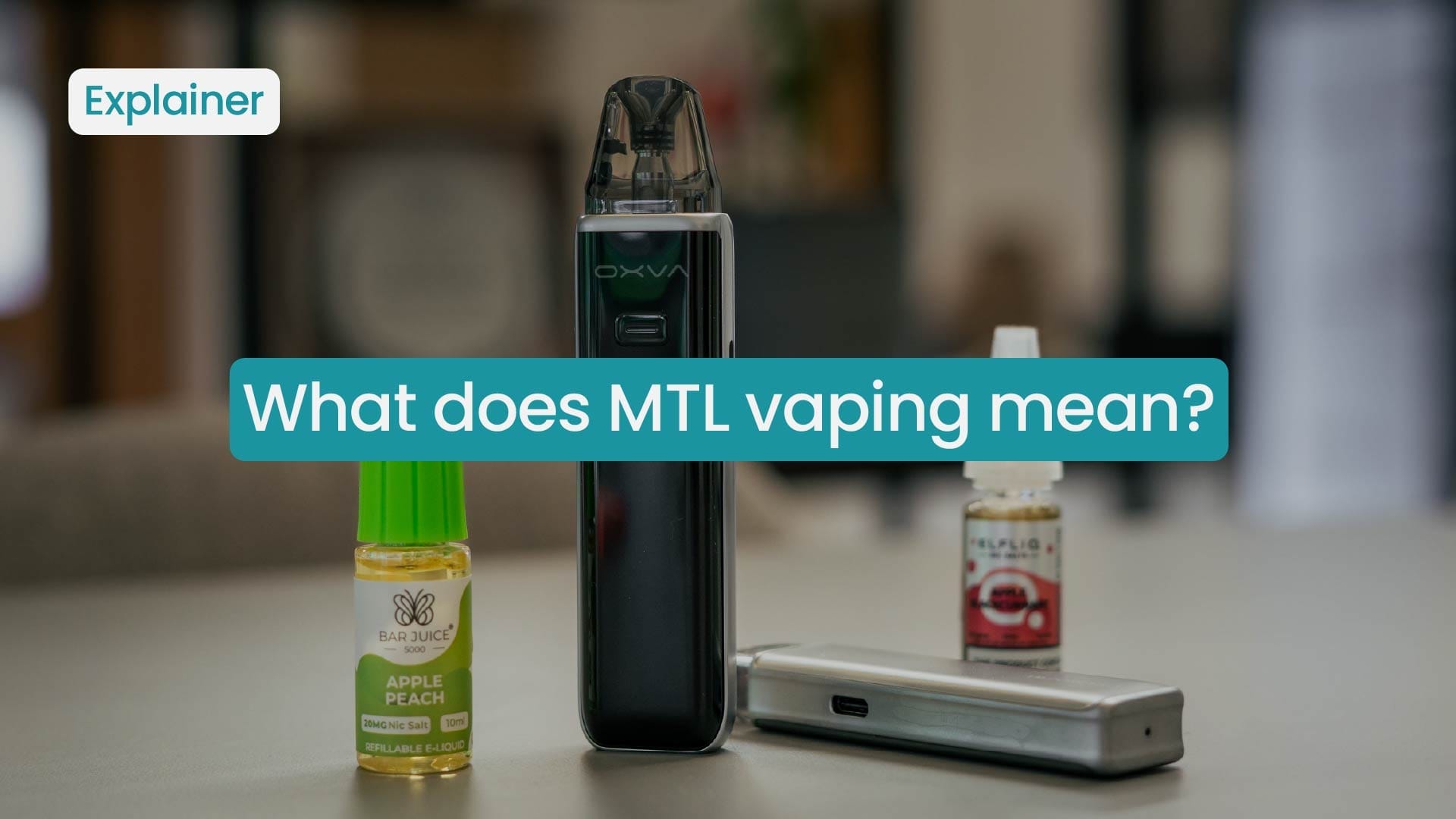
Close-up image of a compact, pen-style or pod vape device, typically used for Mouth-to-Lung (MTL) vaping, highlighting its narrow airflow intake port.
- Tight Draw Mechanism:
- Narrow Intake Slot → High Airflow Resistance → Concentrated Vapour → Mouth First, Then Lungs
When you inhale on a restricted system, you must actively draw with your mouth muscles, creating suction similar to sipping a thick milkshake through a narrow straw or smoking a traditional combustible cigarette.
1. Intense, Concentrated Flavour
Because minimal ambient air enters the chamber to dilute the aerosol, a restricted draw delivers a rich, concentrated flavour profile. Crisp fruit notes, dessert undertones, and robust tobacco blends taste bolder because the vapour concentration remains dense.
2. Warmer Vapour Temperature
With less cooling air passing over the coil, the heat generated by the atomiser stays concentrated. This produces a pleasantly warm, satisfying sensation across the palate, which many former smokers find familiar and comforting.
3. Defined Throat Hit
A tight airflow channel focuses the aerosol into a narrow stream, creating a pronounced "throat hit" (the tactile punch felt at the back of the throat upon inhaling). When paired with higher-resistance coils and suitable e-liquids, this style provides distinct sensory feedback.
4. Efficient E-Liquid and Battery Consumption
Restricted airflow configurations operate at lower wattages (typically between 10W and 20W) with higher-resistance coils (generally 0.8Ω to 1.2Ω and above). Because the system produces smaller vapour volumes per puff, your e-liquid lasts substantially longer, and your battery easily endures a full day of moderate use.
The Loose Draw Vape: Massive Clouds and Free Air Intake
A loose draw vape—often associated with Direct Lung (DL or DTL) and Restricted Direct Lung (RDL) vaping—opens the air intake slots wide.
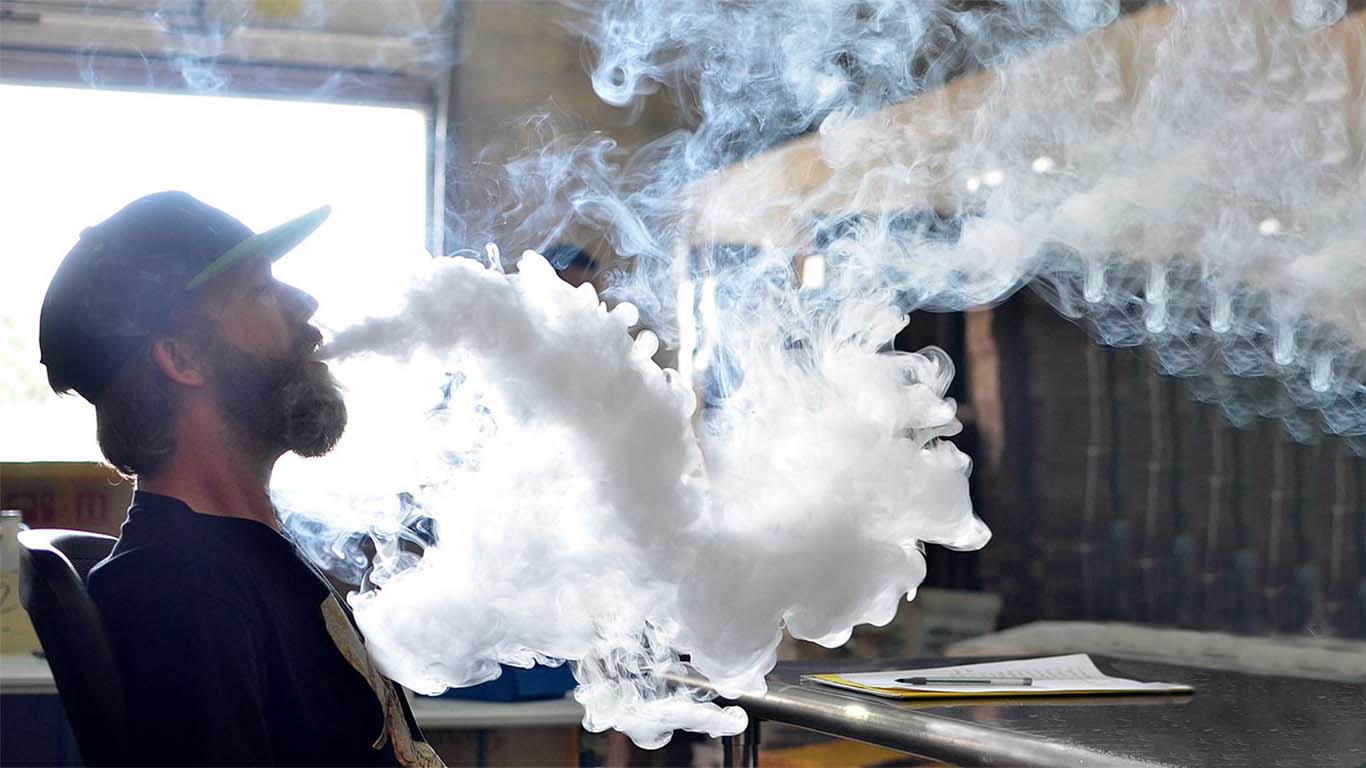
A sub-ohm vape device with a wide-open airflow control, producing a large, dense cloud of vapor, characteristic of Direct Lung (DTL) vaping.
In this configuration, there is virtually zero suction resistance. Rather than collecting the vapour in your mouth before inhaling, you breathe the aerosol directly into your lungs in a smooth, continuous breath, much like inhaling through a snorkel or taking a deep breath of fresh air.
1. Expansive Cloud Production
Wide-open intake slots allow a large volume of air to mix with substantial amounts of vaporised e-liquid. When combined with low-resistance sub-ohm coils (usually 0.15Ω to 0.4Ω) and high power levels (40W to 80W+), the result is dense, room-filling plumes of vapour.
2. Cooler, Smoother Inhale
Even though sub-ohm coils operate at high temperatures, the sheer volume of air sweeping across the atomiser rapidly cools the vapour down. The resulting inhale feels silky, cool, and effortless on the throat.
3. Layered Flavour Nuances
While an open draw slightly dilutes the sheer punchiness of an e-liquid, it excels at opening up complex, multi-layered flavour profiles. Subtle background notes—such as creams, subtle spices, and cooling agents—frequently emerge more distinctly when aerated by a generous airflow channel.
4. Higher Resource Demands
The trade-off for high cloud volume is increased resource usage. An open, high-wattage setup vaporises e-liquid quickly, requiring frequent tank refills and more regular battery recharging.
Tight Draw vs Loose Draw: Side-by-Side Comparison
To help you decide which configuration aligns with your daily habits, here is a detailed breakdown of how airflow settings influence your vape's performance:
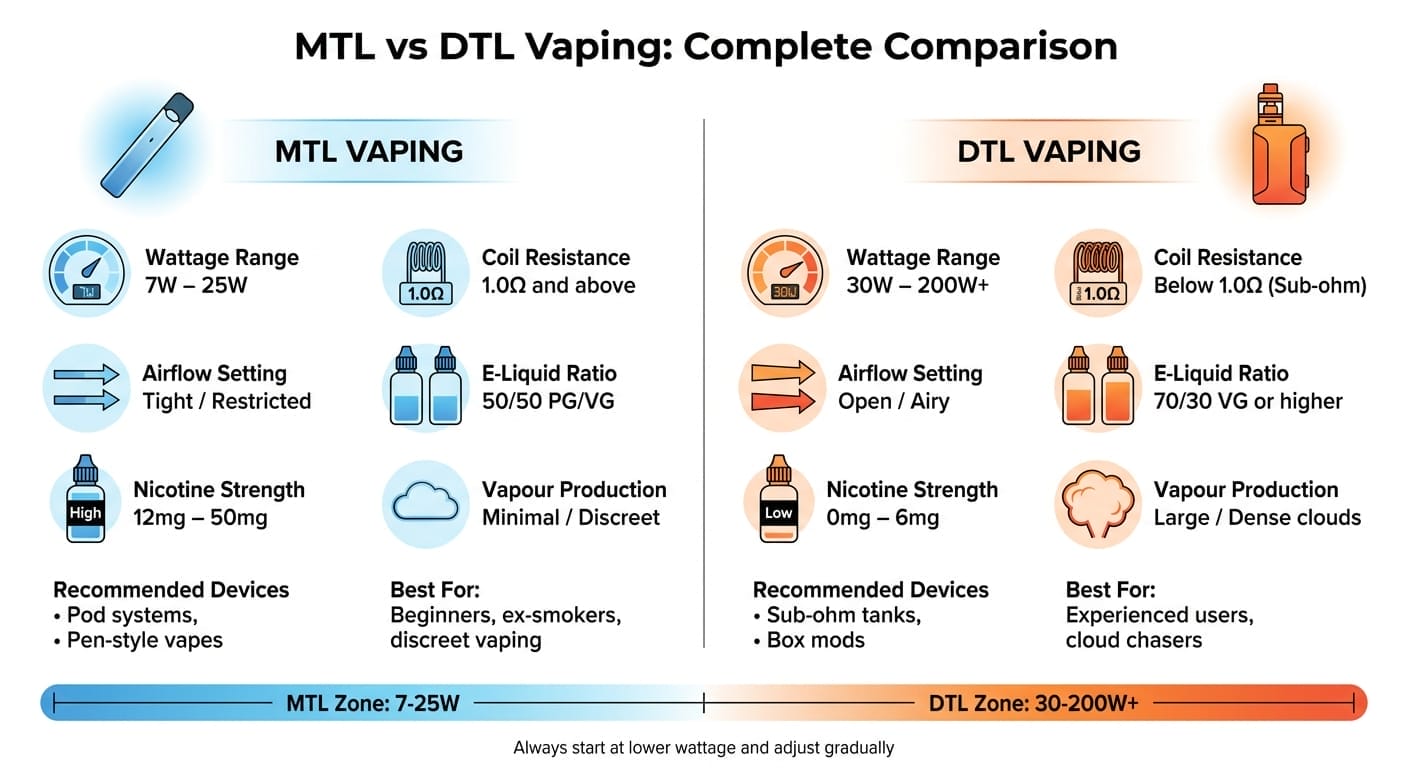
An infographic or comparison chart visually summarizing the key differences between tight (MTL), moderate (RDL), and loose (DTL) vape draws, including vapor warmth, flavor, throat hit, and cloud volume.
| Feature | Tight Draw (MTL) | Moderate Draw (RDL) | Loose Draw (DL / DTL) |
|---|---|---|---|
| Inhalation Technique | Mouth-to-Lung (two-stage inhale) | Restricted direct-to-lung | Direct-to-Lung (single deep breath) |
| Airflow Resistance | High (tight suction) | Moderate (gentle drag) | Low to none (free-flowing) |
| Vapour Warmth | Warm to moderately hot | Balanced / lukewarm | Cool to mild |
| Flavour Profile | Concentrated, punchy | Well-rounded | Smooth, airy, layered |
| Throat Hit | Pronounced and sharp | Mild to moderate | Gentle and smooth |
| Cloud Volume | Discreet, minimal | Moderate plumes | Heavy, expansive clouds |
| Typical Wattage | 9W – 18W | 20W – 35W | 40W – 100W+ |
| Coil Resistance Range | 0.8Ω – 1.4Ω+ | 0.4Ω – 0.8Ω | 0.15Ω – 0.3Ω |
| E-Liquid Consumption | Low (economical) | Moderate | High (fast usage) |
Hardware Types: Fixed vs Adjustable Airflow Systems
Vaping devices manage airflow through various engineering approaches, ranging from simple fixed channels to precision-machined control systems.
- Airflow System Styles:
- Fixed Pinholes — Sliding Toggles — Rotating AFC
- (Starter Pods/Dispos) — (Modern Pod Mods) — (Sub-Ohm & RTAs)
- Preset, no adjustment — Slide to open / close — Knurled ring on base
Composite image showing examples of different vape airflow adjustment mechanisms: a fixed tiny pinhole on a disposable, a slider on a pod mod, and a rotating knurled ring on a sub-ohm tank.
1. Fixed Airflow Channels
Entry-level pod systems and simple disposable units often feature fixed airflow ports. These are tiny holes drilled directly into the side of the chassis or pod casing that cannot be resized. Manufacturers calibrate these ports at the factory to deliver an authentic cigarette-like draw right out of the box, ensuring consistent, fuss-free operation without needing manual adjustments.
2. Sliding Airflow Toggles
Found predominantly on modern refillable pod kits and compact pod mods, sliding toggles offer convenient external adjustment. A small mechanical pin on the side or rear of the battery housing slides back and forth across an internal intake window. This setup lets you shift effortlessly between a tight MTL draw and a semi-restricted RDL hit with a flick of your thumb.
3. Rotating Airflow Control (AFC) Rings
Standard on sub-ohm clearomisers, rebuildable dripping atomisers (RDAs), and rebuildable tank atomisers (RTAs), rotating airflow control rings provide precision tuning. Located either at the base (bottom airflow) or near the top cap (top airflow) of the tank, turning the knurled metal ring gradually exposes or conceals dual or triple intake slots, giving you complete control over millimetre-level adjustments.
How to Adjust Your Vape Airflow for the Perfect Draw
Finding your ideal draw is a quick, intuitive process when you understand the balance between airflow, coil resistance, and operational wattage. Follow this step-by-step approach to tune your device:
- Check Your Coil's Intended Range: Look at the stamped wattage rating on the side of your coil head. High-resistance coils (e.g. 1.0Ω) need low power and narrow airflow; sub-ohm coils (e.g. 0.2Ω) require higher wattage and wider airflow to prevent overheating.
- Start at the Median Setting: Set your airflow ring or slider to roughly 50% open, and set your device's power output to the midpoint of the coil's recommended wattage range.
- Assess the Temperature and Flavour: Take a test draw. If the vapour feels too hot or the draw feels overly tight, open the airflow incrementally. If the vapour feels too cool, airy, or lacks flavour punch, close the airflow down slightly.
- Synchronise Wattage with Airflow:
- If you close the airflow for a warmer, tighter hit, consider dropping your wattage by 2W to 5W so the coil does not overheat.
- If you open the airflow wide, increase the wattage slightly to ensure the larger volume of air still vaporises e-liquid efficiently.
Troubleshooting Common Airflow Issues
Incorrect airflow settings can occasionally lead to performance quirks. Here is how to diagnose and resolve the most common airflow-related problems:
Gurgling and Flooded Coils
If your vape makes a wet, bubbling sound when you inhale, excess e-liquid has entered the atomiser chamber. This often happens when you take strong, forceful drags on an overly tight airflow setting, which acts as a vacuum and pulls unvaporised e-liquid directly into the coil.
- The Fix: Open the airflow slightly or increase your wattage within the coil's recommended range to vaporise the incoming liquid thoroughly.
Spitback (Hot Droplets on the Tongue)
Spitback occurs when e-liquid pools on the coil and boils rather than vaporising into a fine mist. Restricting the airflow too heavily while supplying high wattage reduces the cooling draught needed to carry the vapour cleanly, causing bubbling pops.
- The Fix: Open up the airflow control to clear the aerosol column, or clean out the chimney using a rolled piece of paper towel.
Whistling or Turbulent Air
A loud whistling noise during inhalation usually indicates that air is passing through an awkward, half-shut angle in the intake channel.
- The Fix: Adjust the control ring slightly forward or backward. Repositioning the slot by just a fraction of a millimetre generally smooths out the turbulence and eliminates unwanted noise.
Tank Leaking from Air Intake Holes
On bottom-airflow tanks, e-liquid leaking out of the air slots is generally caused by an internal pressure drop or a worn-out coil seal.
- The Fix: Ensure top caps are sealed tightly to maintain internal vacuum pressure. When filling your tank, close the airflow control ring completely, fill the reservoir, screw the top cap back on firmly, and then reopen the airflow.
Wrapping Up: Finding Your Ideal Draw
Mastering airflow is the key to unlocking the best possible performance from your vape kit. If you value a discreet puff, rich flavour concentration, and an authentic throat hit that closely mirrors a traditional cigarette, a restricted, tight draw is your best match. If your priority is large clouds, effortless direct-lung breathing, and a cool, silky inhale, opening your airflow wide delivers that high-performance experience.
Take a moment to experiment with your device's slider or control ring in small increments. By aligning your airflow with the correct coil resistance and wattage, you can easily customise every draw to suit your personal style.
